
Siblings Inherited a House Together: Sell It, Rent It or Have One Sibling Keep It?
Three siblings can inherit the exact same house and see three completely different things.
One sees Mom and Dad’s home and decades of family memories.
Another sees an asset that should be sold and the proceeds divided.
And the third sees an investment property that could potentially generate rental income for years.
None of them are necessarily wrong.
That is what can make inheriting a home with brothers or sisters one of the most complicated real estate decisions a family will ever face.
The house may be completely paid off.
It may have substantial equity.
One sibling may live nearby.
Another may live out of state.
One person may want to keep the property because of the memories attached to it.
Another may need their share of the money.
And someone else may believe renting the home would be the better long-term investment.
The problem begins when families start making decisions before understanding the property, the legal authority and the financial options.
If you and your siblings inherited a property in Chino, Chino Hills, the Inland Empire or Orange County, the goal should not be to immediately decide who is right.
The goal should be to get everyone working from the same information.
First, Determine Who Has Authority to Make Decisions
Before discussing repairs, list prices or rental income, determine who legally controls the property.
Questions may include:
-
How was the property owned?
-
Is the property held in a trust?
-
Who is the trustee?
-
Is probate required?
-
Is there an executor or administrator?
-
Are multiple siblings beneficiaries?
-
How is title currently held?
Depending on the circumstances, a trustee, executor, administrator or other authorized representative may be responsible for making decisions.
Do not assume every sibling can independently sign contracts or make decisions regarding the home.
If authority is unclear, speak with the appropriate estate-planning or probate attorney before making major decisions.
The real estate plan needs to work within the legal structure of the estate or trust.
What Did Mom or Dad Want?
This can be an emotional question, but it is an important one.
Did Mom or Dad leave instructions regarding the property?
Does the trust, will or estate plan address what should happen to the home?
Did they intend for someone to live there?
Was the property intended to be sold?
Are there specific provisions regarding beneficiaries?
Where valid estate documents provide instructions, those documents and the appropriate legal professionals should guide the family.
When the documents do not dictate a specific outcome, families should be careful about making decisions based solely on statements such as:
“Mom would have wanted us to keep it.”
or
“Dad always said we should sell it.”
Memories and intentions matter.
But when several siblings are involved, everyone should understand the actual legal structure and financial options before deciding what happens next.
Determine What the House Is Worth Today
Before deciding whether to sell, rent, remodel or have one sibling keep the property, establish its current market value.
And do this before remodeling.
Longtime family homes frequently have:
-
Older kitchens
-
Deferred maintenance
-
Old flooring
-
Original bathrooms
-
Full garages
-
Landscaping that needs attention
-
Decades of personal property
None of those automatically mean a renovation is necessary.
First ask:
What would the property likely sell for in its current condition?
Then ask:
What might it sell for after improvements?
Those are two different numbers.
Once the family understands both, you can begin comparing the options.
The 4 Main Options for an Inherited Family Home
When siblings inherit a home together, there are generally several possible paths.
The important thing is to evaluate each option using the same information.
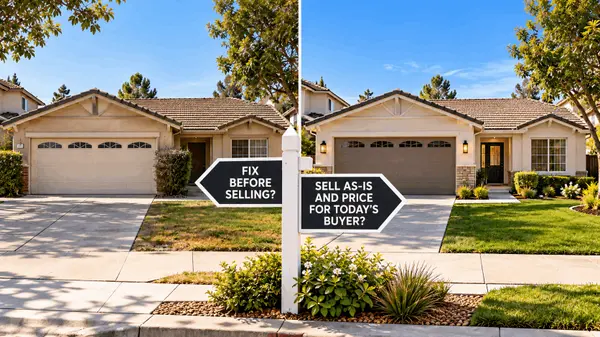
Option 1: Sell the House As-Is
Selling largely as-is may make sense when the family values simplicity, speed and certainty.
Potential advantages can include:
-
Less money invested upfront
-
Fewer contractor decisions
-
Less carrying time
-
Less risk of construction overruns
-
Faster distribution of proceeds
But selling as-is does not necessarily mean selling cheaply.
And it does not automatically mean selling the property directly to an investor.
An inherited property can still be exposed to the broader real estate market and marketed competitively in its current condition.
The real question is:
Would improvements generate enough additional NET proceeds to justify the money, time and risk?
Option 2: Repair the Property Before Selling
Sometimes strategic improvements can produce a worthwhile return.
Those might include:
-
Interior paint
-
Flooring
-
Landscaping
-
Lighting
-
Minor repairs
-
Cleaning
-
Decluttering
-
Cosmetic updates
The key word is:
Strategic.
Suppose the family spends $80,000 remodeling the property and the expected selling price increases by $90,000.
The family did not necessarily make an additional $90,000.
They first spent $80,000.
Then consider:
-
Property taxes
-
Mortgage payments, if applicable
-
Utilities
-
Insurance
-
Landscaping
-
Storage
-
Contractor overruns
-
Additional months of carrying the property
There is also risk.
What if the $80,000 renovation becomes $100,000?
What if the project takes four months instead of two?
What if the market changes during construction?
What if buyers do not value the improvements as highly as expected?
Always compare estimated NET proceeds—not simply the future selling price.
Option 3: Keep the Home as a Rental
Some families decide they would rather retain the property and collect rental income.
That can potentially make sense.
But calculate the complete financial picture.
Include:
-
Property taxes
-
Insurance
-
HOA dues
-
Maintenance
-
Repairs
-
Property management
-
Vacancy
-
Landscaping
-
Capital improvements
-
Legal compliance
-
Future roof, HVAC and plumbing expenses
The fact that the home is paid off does not automatically make it a great rental investment.
Here is a question worth asking:
If you and your siblings did not already own this property, would you choose to buy it today as an investment?
That can help separate the emotional connection to the home from the financial decision.
The family should also compare the expected return from keeping the property with what each heir could potentially do with their share of the proceeds if the property were sold.
A CPA, financial advisor or other appropriate professional can help evaluate tax and investment considerations.
Option 4: Have One Sibling Keep the House
Sometimes one sibling has a strong emotional or practical reason for wanting the home.
Maybe they already live there.
Maybe they want to raise their children there.
Maybe they cared for Mom or Dad.
Maybe they simply cannot imagine the house leaving the family.
One potential solution may be for that sibling to acquire the other heirs’ interests.
But there are several questions to answer.
What is the property's agreed market value?
How much would each sibling be entitled to receive?
Is there an existing mortgage?
Can the sibling qualify for the necessary financing?
What legal or tax consequences need to be considered?
How a buyout is structured depends on the ownership, estate documents, financing and tax circumstances.
The appropriate attorney, tax professional and lender should be involved before assuming a particular structure will work.
A real estate professional can help establish the property's current market value so everyone is working from a realistic number.
What If the Siblings Disagree?
This is where inherited-property decisions can become extremely emotional.
One sibling sees:
Mom’s house.
Another sees:
My share of the equity.
Another sees:
An investment property.
Those are fundamentally different perspectives.
Before arguing about the solution, make sure everyone agrees on the information.
Establish:
-
Current market value
-
Mortgage balance
-
Existing expenses
-
Repair needs
-
Estimated rental income
-
Potential repair costs
-
Expected selling expenses
-
Approximate net proceeds
Once everyone sees the same numbers, the conversation can become much more productive.
Instead of:
“I think we should…”
the family can begin discussing:
“Here is what each option actually looks like.”
Legal disputes between heirs should be handled by qualified attorneys.
What Happens to the Property Taxes?
Do not automatically assume that children who inherit their parents’ California home will keep their parents’ old property-tax basis.
California property-tax rules regarding inherited homes can depend on the circumstances and whether applicable requirements are satisfied.
For longtime homeowners with a very low property-tax basis, this can significantly affect the financial analysis of keeping the property.
Before deciding that one sibling should move into the home or that the family should keep it as a rental, understand what may happen to the property taxes.
Families should consult the appropriate county assessor and qualified tax professionals regarding their specific circumstances.
What If One Sibling Already Lives in the Property?
This can create another layer of complexity.
Maybe one sibling lived with Mom or Dad.
Maybe they helped provide care.
Maybe they have lived in the property for years.
Or perhaps they moved in after the parent passed away.
Do not assume that inheritance automatically answers every occupancy question.
The family may need to determine:
-
Who currently owns the property?
-
Who has authority over it?
-
Was there an existing rental agreement?
-
What do the estate documents say?
-
Does the occupant have legal rights that affect possession?
-
What does the family ultimately want to do with the property?
This is an area where the estate, probate or real estate attorney may need to become involved before the family attempts to remove someone or sell the property.
What If the House Is Full of Belongings?
This is extremely common.
Do not begin by ordering a dumpster.
A home occupied for decades may contain:
-
Important legal documents
-
Financial records
-
Property documents
-
Family photographs
-
Jewelry
-
Collectibles
-
Sentimental belongings
-
Items specifically addressed in estate documents
-
Repair records
-
Insurance information
Start by locating important documents and items of financial or sentimental value.
Then consider sorting everything else into categories:
Keep
Family
Sell
Donate
Discard
Unsure
The Unsure category is important.
You do not need to make every emotional decision immediately.
An estate-sale company, professional organizer, senior move manager or cleanout company can also be extremely helpful when a home contains decades of belongings.
What If Some Siblings Live Out of State?
This is another very common situation.
One heir may live in California while the others live in Texas, Florida, Arizona, Nevada or somewhere else entirely.
That often means someone local needs to coordinate:
-
Property inspections
-
Contractors
-
Cleaning
-
Estate-sale companies
-
Repairs
-
Landscaping
-
Photography
-
Showings
-
Escrow
-
Keys
-
Utilities
-
Security
This is where having a local real estate professional who can become the family’s boots on the ground can be particularly valuable.
The out-of-state siblings should still understand what is happening.
They simply should not have to fly to California every time a contractor needs access to the property.
Put the 4 Options Side by Side Before Deciding
Before choosing what to do, put realistic numbers behind each scenario.
Sell As-Is
What could the property realistically sell for today?
What would the approximate net proceeds be?
How much might each beneficiary receive?
Repair and Sell
How much would the improvements cost?
How long would they take?
What would the property cost to carry during that time?
How much additional net money might those repairs realistically create?
Keep or Rent
What is the realistic monthly rent?
What are the total annual expenses?
What would the actual return be after management, vacancy, maintenance and future repairs?
Sibling Buyout
What is the agreed property value?
What would the other heirs receive?
Can the sibling obtain financing?
What legal or tax considerations need professional review?
Now the family is comparing actual scenarios.
That is a much better place to make a decision than relying on emotion or assumptions alone.
Frequently Asked Questions About Siblings Inheriting a House
Can One Sibling Force the Others to Sell an Inherited House?
Ownership, estate administration and available legal remedies depend on the specific circumstances.
If heirs disagree over what should happen to the property, consult a qualified California probate or real estate attorney before taking action.
Can One Sibling Buy Out the Others?
Potentially.
The financial, legal and tax structure depends on how ownership was transferred, the property's value and whether financing is required.
Professional advice is important before structuring the transaction.
Should Siblings Remodel an Inherited House Before Selling?
Not automatically.
Compare the expected as-is net proceeds with the likely net proceeds after repairs, including renovation expenses, additional carrying costs, time and risk.
Can Siblings Keep an Inherited House as a Rental?
Potentially, assuming the ownership and estate circumstances allow it.
Calculate the complete investment return and understand the legal, tax and management responsibilities before deciding.
Do Children Automatically Keep Their Parents’ Property-Tax Basis?
No.
California's rules regarding inherited property have specific requirements, and the outcome can depend on the circumstances.
Confirm your family's specific situation with the appropriate county assessor and qualified tax professionals.
Can an Inherited Property Be Sold If Some Heirs Live Out of State?
Often, yes.
Many aspects of a real estate transaction can be coordinated remotely, provided the appropriate authorized individuals can execute the necessary documents.
Having someone locally who can coordinate the physical property can make the process much easier.
What If One Sibling Wants to Sell and Another Wants to Keep the House?
Start by determining who has legal authority and establishing the property's current market value.
Then put realistic numbers behind a sale, rental and potential sibling buyout.
If the disagreement involves legal ownership rights or estate administration, consult the appropriate attorney.
How Do We Determine a Fair Buyout Price for One Sibling?
A current market analysis or appraisal can help establish a realistic property value.
The family should also consider existing debt, expected transaction costs and any legal or tax considerations when determining how a buyout could be structured.
Alberto & Leticia’s Perspective
When siblings call us about an inherited property, our first question is not:
“When do you want to list it?”
We want to understand the situation first.
Who has authority to make decisions?
How many beneficiaries are involved?
Where does everyone live?
Is anyone currently living in the property?
What condition is the home in?
Is there deferred maintenance?
Is the house full of belongings?
Does someone want to keep it?
Would the property make sense as a rental?
Would repairs actually increase the family’s net proceeds?
Once we understand the complete picture, we can begin putting real numbers behind the options.
Sometimes selling as-is makes the most sense.
Sometimes completing strategic improvements can create additional value.
Sometimes one sibling wants to explore buying out the others.
Sometimes the family decides to keep the property.
Our goal is not to convince everyone to sell.
It is to help everyone understand their options.
Final Thoughts
When siblings inherit a home together, the real estate is only part of the decision.
There are family relationships.
Emotions.
Finances.
Memories.
Taxes.
Legal responsibilities.
And sometimes very different opinions about what Mom or Dad would have wanted.
That is why the family should not begin by arguing about whether to sell.
Start by determining who has authority.
Understand the property's current value.
Understand the condition.
Determine the ongoing expenses.
Put realistic numbers behind selling as-is, repairing and selling, renting and a potential sibling buyout.
Then compare the options.
The goal isn't necessarily getting everyone to want the same thing.
The goal is getting everyone the same information so the family can make the best possible decision.
Inherited a House With Your Siblings and Not Sure What to Do Next?
You do not need to decide whether to sell, rent or keep the property before talking with us.
That is what the conversation is for.
If you and your siblings inherited a home in Chino, Chino Hills, the Inland Empire or Orange County, Leticia & Alberto Sotomayor can help establish the property's current market value, compare selling as-is versus completing improvements, discuss the real estate considerations of keeping the property and help put realistic numbers behind a potential sibling buyout.
And if some family members live outside the area, we can help coordinate the local real estate pieces so everyone understands what is happening with the property.
For legal, probate, estate or tax questions, the appropriate attorneys and tax professionals should remain part of the team.
If you and your siblings inherited a home and everyone has a different opinion about what should happen next, contact Leticia & Alberto Sotomayor. We'll help your family understand the real estate options, put real numbers behind each choice and create a practical plan for what happens next.
FROM OUR BLOG

How to Avoid Probate on a House in Chino, CA
How to Avoid Probate on a House in Chino, CA If your parents own a house in Chino, there is an important question your family may want to address before something happens to Mom or Dad: What happens to the house when they pass away—and can the family avoid probate? The most important thing to unders

Top 3 Ways to Avoid Probate on a House in Chino or Chino Hills
Top 3 Ways to Avoid Probate on a House in Chino or Chino Hills If you own a home in Chino or Chino Hills, there is an estate-planning question worth answering long before your family ever needs to sell the property: What happens to the house when you die? Many homeowners assume: “I have a will, so m

The House Has Been Sitting 45 Days: What Chino and Chino Hills Buyers Should Negotiate
The House Has Been Sitting 45 Days: What Chino and Chino Hills Buyers Should Negotiate You find a home in Chino or Chino Hills that catches your attention. You like the neighborhood. The floor plan works. The price fits your budget. Then you notice something: The house has been sitting on the market