
Should You Reduce the Price of Your Chino or Chino Hills Home—or Wait?
Your home has been on the market for two weeks.
The showings are slowing down.
No offers have come in.
Now comes one of the hardest conversations for any seller:
Do we reduce the price—or wait for the right buyer?
Waiting can feel safer.
Maybe the right buyer simply hasn’t seen the house yet.
Maybe next weekend will be busier.
Maybe mortgage rates will improve.
Maybe another buyer will suddenly fall in love with it.
And sometimes waiting is the right decision.
But there’s another possibility:
The market may already be giving you the answer.
The challenge is knowing how to read what buyers are telling you before you spend the next 30, 45 or 60 days chasing the market down.
A Price Reduction Shouldn’t Be Based on a Calendar
There is no universal rule that says:
“Reduce the price after 14 days.”
Or:
“Always wait 30 days.”
Two Chino homes can be listed for exactly the same number of days and require completely different strategies.
Instead of looking only at days on market, look at buyer behavior.
Ask:
- How many people are viewing the property online?
- How many buyers are scheduling showings?
- How many have returned for a second showing?
- What feedback keeps repeating?
- Have buyers written any offers?
- Are competing properties going pending?
- Have competing sellers reduced their prices?
- Have new listings entered your price range?
- Are buyers consistently choosing another property instead?
Days on market tell you how long you’ve been listed. Buyer behavior tells you how the market feels about your house.
That distinction matters.
No Showings and No Offers Are NOT the Same Problem
This may be one of the most important concepts for a seller to understand.
Imagine your home has been listed for two weeks and you’ve received almost no showings.
Buyers haven’t even walked through the front door.
That means they may be rejecting something they can see before visiting the property.
We would immediately evaluate:
- Price
- Photography
- Online presentation
- Marketing
- Property condition
- Location
- Competition
- How the home compares with other listings at the same price
Now imagine something different.
You’ve had:
15 showings—but zero offers.
That’s a different message.
Buyers found the home appealing enough online to schedule an appointment.
They drove to the property.
They walked through it.
And then:
They chose not to buy it.
Now we need to understand what changed after they walked through the door.
What Are Buyers Seeing That You’re Not?
This is where seller feedback becomes extremely valuable.
Maybe buyers repeatedly mention:
- An older roof
- Original HVAC
- Deferred maintenance
- Worn flooring
- An older electrical panel
- An outdated kitchen
- Dated bathrooms
- An unusual floor plan
- Backyard condition
- Traffic
- Neighborhood noise
- Lack of natural light
Or maybe there’s nothing particularly wrong with the house.
The buyer simply walked through yours and then walked through another home for roughly the same price and thought:
“I’d rather buy that one.”
That is market information.
One buyer saying your kitchen is dated is an opinion.
Ten buyers saying:
“We like the house, but for this price we’d rather buy the updated one nearby.”
is a pattern.
Patterns deserve attention.
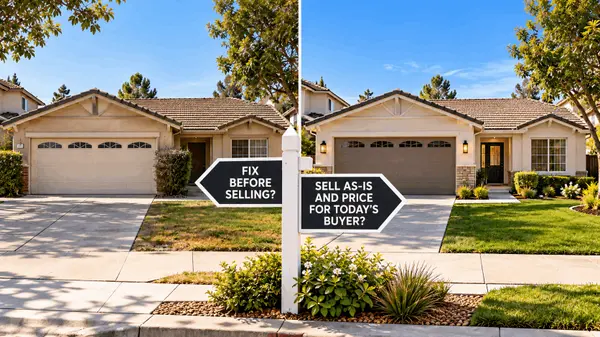
If condition appears to be affecting buyer perception, this is exactly when you should evaluate whether it makes more sense to fix certain items or price the property for its current condition.
Who Is “The Market”?
Sellers hear this phrase constantly:
“The market says…”
But who exactly is the market?
The market is the active buyers who are financially capable and willing to purchase a home like yours right now.
Not your neighbor.
Not the homeowner down the street.
Not an automated home-value estimate.
Not the seller.
Not the agent.
The people actually making purchasing decisions determine what properties sell and at what price.
That’s why we pay so much attention to:
Showings.
Second showings.
Offers.
Feedback.
Pending sales.
Competing listings.
Those behaviors tell us much more than someone’s opinion about what a property should be worth.
What Happens When You Wait Too Long?
This is where pricing strategy becomes especially important.
Imagine listing your Chino home at:
$950,000
The first week produces limited activity.
You decide to wait.
Week two passes.
Still no offer.
Week three:
You reduce the price to:
$925,000
But by then, some of the buyers who initially saw the property have moved on.
The home continues sitting.
Eventually you reduce it again:
$899,000
Now a new buyer sees:
Longer days on market.
Multiple price reductions.
And potentially:
A seller who appears increasingly motivated.
The buyer may no longer ask:
“Is this house worth $899,000?”
Instead, they may ask:
“How much lower will the seller go?”
And then they may also negotiate:
- Closing-cost assistance
- Repairs
- Seller credits
- Financing concessions
- Other terms
That’s why:
The first appropriate price adjustment can sometimes be the least expensive one.
Don’t Chase the Market Down
Here’s the scenario we want to avoid:
$950,000 → no activity
$925,000 → still chasing
$899,000 → buyers negotiate further
$885,000 → eventual offer
The seller may eventually say:
“Why didn’t we just price it correctly in the beginning?”
That’s a fair question.
But there’s an important distinction.
Sometimes a seller and agent truly don’t know exactly where buyers will respond until the property is exposed to the market.
That’s okay.
The mistake isn’t always starting at the wrong price.
The bigger mistake can be receiving clear market feedback and refusing to respond to it.
Does That Mean You Should Reduce the Price Immediately?
No.
The key word is:
Appropriate.
If your home is receiving strong showing activity and buyers are returning for second appointments, the strategy may deserve more time.
If several competing properties are also sitting, the issue may reflect broader market conditions.
If buyers repeatedly identify one correctable issue, addressing that issue may make more sense than reducing the price.
Maybe:
- The landscaping needs attention
- The house needs decluttering
- A room photographs poorly
- Lighting needs improvement
- The home needs a deep cleaning
- A small repair is distracting buyers
The goal isn’t lowering the price.
The goal is diagnosing why the property hasn’t sold and choosing the least expensive effective solution.
Today’s Buyers Have More Choices
Today’s market is different from the extremely competitive pandemic-era housing market.
In many markets, buyers have more choices and more time to compare properties.
When buyers have only one realistic house to choose from, they may compromise.
When they have five?
They start comparing.
They compare:
- Price
- Condition
- Location
- Floor plan
- Lot
- Updates
- Monthly payment
- Insurance
- HOA
- Seller incentives
- Future repairs
That means sellers aren’t competing only against the house that sold six months ago.
You’re competing against the houses buyers can purchase today.
Your Active Competition Matters More Than Most Sellers Realize
A seller may say:
“The house down the street sold for $950,000.”
That’s useful information.
But the buyer isn’t deciding between your home and a house that’s already sold.
They’re deciding between:
Your house
and:
everything else they can tour this weekend.
Suppose you’re listed at $925,000.
Then tomorrow another property comes on the market at $915,000 with:
- New flooring
- Updated kitchen
- Newer HVAC
- Better landscaping
- Similar square footage
Your competitive position just changed.
Even though you didn’t change anything.
That’s why pricing isn’t a decision you make once on listing day and then forget.
The market keeps moving.
What Does the Chino Market Tell Us?
Recent housing data continues to show that Chino is highly property-specific.
Some properties are still generating enough buyer interest to create strong competition.
Others are requiring more time or negotiation.
That tells sellers something important:
There isn’t one Chino market.
Simply saying:
“The Chino market is slow.”
or:
“Chino homes are still selling over asking.”
doesn’t tell the whole story.
Your home’s:
- Neighborhood
- Condition
- Lot
- Updates
- Floor plan
- Presentation
- Competition
- Initial pricing
can produce a very different result from another property a mile away.
What About Chino Hills?
Chino Hills can behave differently depending on neighborhood, price range and property condition.
Some sellers are negotiating below their original asking prices, while desirable, properly positioned properties can still attract significant buyer interest.
Those two things can exist at the same time.
Home values can remain relatively strong while individual sellers still need to negotiate.
That’s exactly why sellers shouldn’t confuse:
“The market is holding value.”
with:
“Buyers will pay whatever price we choose.”
They won’t.
Price Isn’t the Only Tool You Have
Suppose buyers like the house.
They like the neighborhood.
They like the floor plan.
But they’re struggling with the complete financial picture.
A price reduction is one possible tool.
But it’s not the only one.
Depending on the transaction, another option may be:
A seller concession.
Depending on financing and contractual requirements, concessions may potentially help with eligible:
- Closing costs
- Repairs
- Prepaid expenses
- Financing costs
- Rate-buydown structures
But the right tool depends on the problem.
Should You Reduce the Price—or Offer a Credit?
Ask:
“What is preventing the buyer from saying yes?”
If buyers aren’t scheduling showings because they believe the home is overpriced, a credit may not solve the problem.
Why?
Because they may never get far enough to discover the credit.
A price adjustment may expose the property to a different group of buyers.
But suppose buyers love the house.
They’re writing offers.
They’re simply struggling with:
- Cash needed at closing
- Monthly payment
- A specific repair
Now a properly structured concession may potentially address the actual obstacle.
Don’t choose the tool first. Diagnose the problem first.
Be Careful About Giving Away Both
Here’s where sellers can lose more money than they expected.
A seller starts too high.
The home sits.
The seller reduces the price.
Then an eventual buyer negotiates an additional concession.
Maybe repairs too.
Now the seller has given up value in several different places.
This doesn’t mean every early price reduction prevents concessions.
It doesn’t.
But it reinforces why the complete strategy matters from the beginning.
A $10,000 Price Reduction and a $10,000 Credit Are Not Necessarily the Same
This is another reason sellers should evaluate the complete transaction.
Suppose you’re willing to give up $10,000 to make a deal work.
You could potentially:
Reduce the price by $10,000.
Or, depending on the buyer’s financing and transaction:
Provide an eligible $10,000 seller credit.
Those choices may affect the buyer differently.
Have the buyer’s lender calculate applicable financing scenarios.
Then evaluate:
Which structure actually solves the problem?
Don’t Price Based on What You Need
This can be one of the hardest conversations in real estate.
Maybe you need a particular amount because you’re:
- Buying your next home
- Paying off debt
- Retiring
- Dividing assets
- Helping family
- Moving out of state
Those financial needs are real.
But buyers don’t determine their offer based on what the seller needs.
They ask:
“What else can I buy for this amount of money?”
That’s the competition.
If you want to understand what you’ll actually walk away with rather than focusing only on sale price, read our guide on how much it costs to sell a house in Chino and how to estimate your net proceeds.
Don’t Price Based Only on Your Neighbor’s Sale
Your neighbor’s sale matters.
Comparable sales matter.
But they’re only part of the picture.
Suppose your neighbor sold six months ago.
Since then:
- Mortgage rates changed
- Inventory changed
- Buyer demand changed
- New listings entered the market
- Competing sellers reduced prices
- Builder incentives changed
- Buyer affordability changed
So ask:
“What can a buyer purchase instead of our house today?”
That question often tells you more about your current competitive position.
What If Condition Is the Problem?
Sometimes the issue isn’t purely price.
Maybe your property has:
- An older roof
- Original HVAC
- Older electrical
- Worn flooring
- An outdated kitchen
- Deferred maintenance
You have several potential strategies.
You might:
Fix it.
Improve selected items.
Offer an appropriate credit.
Or:
Price for the condition.
Before spending $20,000, $30,000 or $50,000 on improvements, understand whether buyers are likely to pay you back for them.
The goal isn’t to make the home perfect.
The goal is to determine which strategy creates the best overall financial outcome.
What If You Already Reduced the Price Once?
Don’t automatically assume:
“We’ve already reduced it, so now we just wait.”
The question is whether the new price changed buyer behavior.
After the reduction:
Did online activity increase?
Did showings increase?
Did second showings appear?
Did you receive an offer?
Did the property become more competitive with similar homes?
If nothing changed, that is information too.
A price reduction isn’t successful simply because the number changed. It’s successful when buyer behavior changes.
What If Your Listing Expires?
Sometimes sellers wait so long that the listing eventually expires.
At that point, the natural reaction can be:
“Forget it. We’re staying.”
That may be the right decision.
But ask yourself:
Did your reason for moving disappear—or did the listing simply fail to accomplish the goal?
Those are very different things.
If you’re facing that situation, read our guide on what to do when your Chino or Chino Hills listing expired but your reason for moving didn’t.
What If Your Reason for Moving Hasn’t Changed?
This may be the most important question in the entire conversation.
Why did you put the house on the market in the first place?
Maybe:
- Your job relocated
- You’re retiring
- You’re downsizing
- You inherited a property
- Mom or Dad needs care
- You’re moving closer to family
- Your family is growing
- You need multigenerational space
- You’re going through a divorce
- You already purchased another home
If your house hasn’t sold, ask:
“Has the reason we wanted to move changed?”
If the answer is yes, staying may make sense.
But if the answer is:
“No. We still need to move.”
then protecting an asking price indefinitely may not actually protect your family’s goal.
Sometimes the strategy needs to change because the reason for moving hasn’t.
What If You Already Bought Your Next Home?
Now time can have a measurable cost.
Suppose you’re carrying:
- Two mortgage payments
- Two property-tax obligations
- Two insurance policies
- Two sets of utilities
- Two HOA payments
- Two properties to maintain
Waiting another 30 or 60 days isn’t free.
This is where sellers need to compare:
The cost of adjusting the price
with:
The cost of continuing to hold the property.
A $10,000 adjustment may initially feel painful.
But if holding the property another three months costs $12,000—and you eventually reduce the price anyway—the delay may have been more expensive.
Run the complete numbers.
And if you’re trying to coordinate both sides of a move, read our guide on how to sell and buy a house at the same time in Chino Hills.
The 7 Questions We’d Ask Before Reducing the Price
Before changing your asking price, answer these:
1. How many serious showings have we received?
2. What feedback keeps repeating?
3. Are comparable homes going pending while ours remains available?
4. Has our competition changed since we listed?
5. Is the problem price, condition, presentation, marketing—or some combination?
6. Would a concession solve the problem better than a price adjustment?
7. What is waiting another 30 days actually costing us?
Once those questions are answered, the decision becomes much less emotional.
Frequently Asked Questions
How long should I wait before reducing the price of my Chino home?
There is no universal number of days. Evaluate showing activity, buyer feedback, competing listings, recent pending sales and whether buyers are responding to the current price. An arbitrary 14-, 21- or 30-day rule is less useful than actual market behavior.
Does no showings mean my home is overpriced?
Possibly, but price isn’t the only explanation. Photography, online presentation, marketing, property condition and competing inventory should also be evaluated. Very little showing activity can indicate buyers are rejecting the property’s overall value proposition before visiting.
What if I’m getting showings but no offers?
That tells you buyers find the property interesting enough to visit but something is preventing them from taking the next step. Look for repeated feedback involving condition, layout, location, repairs or price relative to competing properties.
Are Chino homes still selling above asking price?
Some are. Chino remains highly property-specific. Well-positioned homes can still attract strong buyer interest, while other properties require more time or negotiation. Price, condition, location and competition all matter.
Are Chino Hills sellers negotiating?
Some are. Individual results vary significantly by neighborhood, price range, condition and competition. A desirable, properly positioned Chino Hills home can behave very differently from an overpriced property competing against several similar listings.
Should I offer a seller credit instead of reducing the price?
Possibly. If buyers aren’t even scheduling showings, a price adjustment may address a different problem than a credit. If buyers want the property but need help with eligible costs or financing, a properly structured concession may be more useful. Financing and contractual requirements apply.
Should I wait for mortgage rates to fall before reducing my price?
Nobody knows exactly where mortgage rates will be in the future. If your move is optional, waiting may be one possible strategy. If you genuinely need to move, evaluate today’s market, your carrying costs and your family’s timeline rather than basing the entire decision on a future rate forecast.
What if I already reduced my price and still don’t have an offer?
Evaluate whether the reduction changed buyer behavior. If showings, second showings and offers did not improve, review the property’s current price, condition, presentation, marketing and competition before deciding what to do next.
Final Thoughts
Reducing the price of your Chino or Chino Hills home is not admitting failure.
And refusing to reduce it is not automatically protecting your equity.
The question is:
What is the market telling us?
If buyers are responding positively:
Stay patient.
If buyers consistently reject the price:
Listen.
If buyers visit but don’t make offers:
Figure out what changes after they walk through the door.
If competing homes are selling while yours isn’t:
Understand why.
If one correctable issue keeps appearing:
Address it.
And if your reason for moving hasn’t changed:
Don’t lose sight of the goal because you’re defending the original strategy.
Sometimes the right decision is:
Wait.
Sometimes:
Improve the presentation.
Sometimes:
Offer a concession.
And sometimes:
Adjust the price before you spend the next 60 days chasing the market down.
Leticia and Alberto Sotomayor are Realtors helping homeowners throughout Chino, Chino Hills, the Inland Empire and Orange County understand buyer feedback, evaluate their options and create selling strategies around the reason their family needs to move.
Our job is to organize the decisions, reduce uncertainty and help families move forward.
The strongest sellers don’t ignore what the market tells them. They use that information to make the next decision better.
FROM OUR BLOG

How to Avoid Probate on a House in Chino, CA
How to Avoid Probate on a House in Chino, CA If your parents own a house in Chino, there is an important question your family may want to address before something happens to Mom or Dad: What happens to the house when they pass away—and can the family avoid probate? The most important thing to unders

Top 3 Ways to Avoid Probate on a House in Chino or Chino Hills
Top 3 Ways to Avoid Probate on a House in Chino or Chino Hills If you own a home in Chino or Chino Hills, there is an estate-planning question worth answering long before your family ever needs to sell the property: What happens to the house when you die? Many homeowners assume: “I have a will, so m

The House Has Been Sitting 45 Days: What Chino and Chino Hills Buyers Should Negotiate
The House Has Been Sitting 45 Days: What Chino and Chino Hills Buyers Should Negotiate You find a home in Chino or Chino Hills that catches your attention. You like the neighborhood. The floor plan works. The price fits your budget. Then you notice something: The house has been sitting on the market