
My Parents Have Lived in Their Home for 30 Years. How Do We Help Them Downsize?
There comes a point in many families when the children begin noticing things Mom or Dad may not be ready to talk about yet.
The stairs seem harder.
The yard isn't being maintained the way it once was.
Rooms that used to be filled with children are now empty.
Repairs are beginning to pile up.
Driving is becoming more difficult.
One parent may have passed away, leaving the other to manage a large home alone.
And eventually someone in the family quietly asks:
“Is this house still the right home for Mom or Dad?”
That can be an incredibly difficult question.
Because you're not simply talking about a piece of real estate.
You're talking about their home.
Maybe they bought it 30 or 40 years ago.
Maybe it's where you grew up.
Your height might still be marked on a doorway.
Family holidays happened there.
Grandchildren learned to swim in the backyard.
Dad's tools are still in the garage.
Mom knows every neighbor on the street.
The mortgage may be paid off.
Their property taxes may be extremely low.
And every room may contain memories.
So when an adult child says:
“Maybe it's time to move.”
Mom or Dad may hear something completely different:
“You're losing your independence.”
That is why helping aging parents downsize should not begin with convincing them to sell their house.
It should begin with a conversation about what they want the next stage of their life to look like.
If your parents own a longtime home in Chino, Chino Hills, the Inland Empire or Orange County, here's how we would begin thinking through that transition.
Start With Mom and Dad—Not the House
This may sound unusual coming from real estate professionals.
But the first question shouldn't be:
“How much can we sell the house for?”
Start with:
“What does Mom or Dad need for the next stage of life?”
Maybe they want to remain in Chino or Chino Hills.
Maybe they need a single-story home.
Maybe they want a smaller backyard.
Maybe they want to live closer to their children or grandchildren.
Maybe they want a 55+ community.
Maybe one parent wants to move out of California to be closer to family.
Maybe they need assisted living.
Or maybe they don't actually need to move at all.
Perhaps modifications and additional help could allow them to remain safely in the home they love.
Until you understand where Mom or Dad wants to go, it's difficult to decide what should happen to the house they're leaving.
Do Not Wait Until a Crisis Makes the Decision for You
One of the biggest mistakes families make is waiting too long to have this conversation.
Nobody wants to bring it up.
So everyone waits.
Then something happens.
A fall.
Surgery.
A hospitalization.
The loss of a spouse.
A driver's license is surrendered.
Mobility suddenly changes.
And now decisions that could have been thoughtfully discussed over six months need to be made in two weeks.
That's when families become overwhelmed.
Where will Mom live?
What happens to the house?
Who handles everything inside?
Does it need repairs?
Can she afford the next home?
Should we sell first?
Suddenly there are ten decisions happening simultaneously.
Planning earlier gives your parents something extremely valuable: control.
They can tour communities.
Look at single-story homes.
Understand their finances.
Talk with their CPA.
Explore Proposition 19.
Visit neighborhoods near their children.
Sort belongings gradually.
And decide what they actually want.
The goal isn't to make Mom or Dad move earlier.
The goal is to create options before circumstances remove those options.
How Do You Start the Downsizing Conversation Without Making Mom or Dad Feel Pushed?
This may be more important than anything involving the house.
Don't begin with:
“You can't stay here anymore.”
Instead, ask questions.
“How are you feeling about taking care of the house?”
“Are the stairs bothering you?”
“Would you ever want to live closer to us?”
“If you didn't have to maintain this yard anymore, would that make life easier?”
“What would your ideal home look like five years from now?”
And then listen.
Mom or Dad may surprise you.
Maybe they've already been thinking about moving.
Or maybe they're terrified of it.
Either way, you now understand what the real conversation is about.
Understand Their Home Equity Before Assuming What They Can or Cannot Afford
Longtime Southern California homeowners may be sitting on substantial equity.
A home purchased decades ago for $250,000 or $300,000 could potentially be worth considerably more today.
That equity can completely change the financial picture.
Before saying:
“Mom could never afford another house at today's prices.”
Find out the numbers.
Determine:
- Current estimated home value
- Mortgage balance
- Approximate selling expenses
- Estimated net proceeds
- Savings
- Retirement income
- Expected next-home price
- Expected housing expenses
For example, someone may own a $1 million home with little or no mortgage.
Selling doesn't necessarily mean replacing a 3% mortgage with an enormous new loan.
Depending on their equity and next purchase, they may be able to make a very large down payment or potentially purchase differently than a younger buyer would.
Don't assume the next move is financially impossible until you understand the equity.
Do Not Ignore Their California Property-Tax Basis
This can be extremely important for longtime California homeowners.
Someone who purchased their home decades ago may have a property-tax basis far below today's market value.
Understandably, that can make them reluctant to move.
But eligible California homeowners age 55 or older may have options under Proposition 19 to transfer the taxable value of a qualifying principal residence to another qualifying principal residence within California, subject to applicable requirements and calculations.
This is an area where families should obtain information specific to their circumstances.
Speak with the appropriate county assessor and qualified tax professional before relying on assumptions about what the new property taxes will be.
Don't automatically assume:
“Mom will lose her property-tax basis if she moves.”
And don't automatically assume:
“Her property taxes will stay exactly the same.”
Get the actual numbers.
Compare Aging in Place With Downsizing
Selling is not automatically the right answer.
Sometimes staying in the longtime home makes more sense.
Put both options on the table.
Option 1: Aging in Place
Ask:
Could the house be modified?
Could a downstairs room become a bedroom?
Could bathrooms be made safer?
Would grab bars or accessibility improvements help?
Could landscaping services reduce the physical workload?
Could housekeeping help?
Could home-care assistance allow Mom or Dad to remain safely?
Would transportation assistance solve the driving problem?
If relatively modest changes could allow your parent to remain safely and happily in the home, that deserves serious consideration.
Option 2: Downsizing
Now ask:
Would a single-story home make everyday life easier?
Would a smaller property reduce maintenance?
Would moving closer to children or grandchildren improve quality of life?
Could home equity significantly reduce or eliminate the next mortgage?
Would a 55+ community provide more activities and social opportunities?
Would a smaller home reduce monthly expenses?
Would Mom or Dad feel safer?
There isn't one correct answer.
Compare safety, finances, independence, maintenance and quality of life—not simply square footage.
What If Mom or Dad Has a 3% Mortgage?
This comes up constantly.
And it's a legitimate concern.
A 3% mortgage has real financial value.
Nobody should pretend otherwise.
But a low mortgage rate doesn't solve every housing problem.
It doesn't eliminate stairs.
It doesn't maintain a large backyard.
It doesn't make a pool easier to care for.
It doesn't move the house closer to the grandchildren.
It doesn't make driving easier.
And it doesn't make a 3,000-square-foot house easier for one surviving spouse to maintain.
The mortgage rate should absolutely be part of the decision.
It should not automatically make the decision.
Should Mom or Dad Buy Before Selling?
This depends on their financial situation and comfort level.
There are several potential strategies:
- Sell first
- Buy first
- Coordinate both transactions
- Stay temporarily with family
- Use temporary housing
- Negotiate additional occupancy after closing
- Move first and sell the old home vacant
For an older homeowner, the mathematically perfect transaction isn't necessarily the emotionally best transaction.
Moving once instead of twice may matter.
Knowing exactly where they're going may reduce anxiety.
Having extra time to move belongings may be extremely valuable.
The transaction should be designed around the person—not the other way around.
Should You Remodel Mom and Dad's House Before Selling?
Not automatically.
A home occupied for 30 years may need work.
Maybe the kitchen is dated.
The bathrooms are original.
The carpet needs replacing.
The landscaping needs attention.
The house needs paint.
It's tempting to say:
“Let's remodel everything and get top dollar.”
But before spending $50,000, $75,000 or $100,000, determine two numbers:
What could the house realistically sell for today in its current condition?
And:
What could it realistically sell for after improvements?
Then subtract:
- Renovation costs
- Additional carrying costs
- Utilities
- Insurance
- Property taxes
- Landscaping
- Contractor overruns
- Time
A higher sales price does not automatically mean a higher financial return.
Compare estimated net proceeds—not simply sales prices.
Sometimes improvements make sense.
Sometimes a few strategic cosmetic updates are enough.
And sometimes selling the property largely as-is is the better decision.
What About 30 or 40 Years of Belongings?
For many families, this is harder than selling the house.
Open the garage.
Every shelf is full.
Open a closet.
There are boxes nobody has touched in 15 years.
Your childhood belongings may still be there.
There are photographs.
Furniture.
Tools.
Documents.
Holiday decorations.
Collections.
Family heirlooms.
Things with monetary value.
And things worth almost nothing financially that mean everything emotionally.
Do not try to solve 30 years of memories in one weekend.
Start slowly.
Create categories:
KEEP
GIVE TO FAMILY
SELL
DONATE
DISCARD
UNSURE
The UNSURE pile matters.
Nobody needs to decide what happens to every sentimental item immediately.
Families may also benefit from:
- Professional organizers
- Senior move managers
- Estate-sale companies
- Donation services
- Cleanout companies
- Movers
Sometimes the best thing adult children can do is help coordinate the process rather than trying to physically do everything themselves.
What If the Adult Children Live Out of State?
This happens all the time.
Mom or Dad may own a longtime home in Chino or Chino Hills while their children now live in Arizona, Nevada, Texas, Florida, Tennessee or somewhere else.
Someone local may need to coordinate:
- Property inspections
- Contractors
- Cleaning
- Estate-sale companies
- Movers
- Landscaping
- Repairs
- Photography
- Showings
- Utilities
- Keys
- Security
- Escrow
The adult children shouldn't have to fly to California every time a contractor needs access to the property.
This is where a local real estate professional can become the family's boots on the ground.
What If Mom or Dad Doesn't Want to Move?
Listen.
Don't begin by explaining why they're wrong.
Their resistance may have very little to do with real estate.
It may be about:
Independence.
Memories.
Fear.
Losing a spouse.
Leaving neighbors.
Change.
Feeling old.
Feeling like their children are now making decisions for them.
Imagine living independently for 70 or 80 years and suddenly hearing everyone discuss what you should do with your home.
That can be frightening.
Whenever possible, Mom or Dad should remain at the center of decisions involving their home and future.
The goal isn't:
“How do we convince them?”
A better question is:
“How do we help them understand the options?”
What If One Parent Passes Away?
This can change everything.
A home that worked beautifully for two people may suddenly feel enormous for one.
The surviving spouse may now be responsible for:
- Maintenance
- Finances
- Yard work
- Repairs
- Driving
- Household responsibilities
At the same time, they may be grieving.
This is rarely the ideal moment to pressure someone into a major decision.
But it may be the right time to begin understanding the options.
Sometimes the surviving parent wants to remain in the home.
Sometimes they want to move closer to family.
Sometimes they simply don't know yet.
Give the person time while making sure the property and financial responsibilities are being handled.
Build the Team Before You Need It
A major senior transition may eventually involve more than a Realtor.
Depending on the circumstances, the family may need:
- Real estate professional
- CPA
- Estate-planning attorney
- Elder-law attorney
- Financial advisor
- Mortgage professional
- Senior move manager
- Estate-sale company
- Professional organizer
- Contractor
- Mover
- Home-care professional
- Assisted-living advisor
You may not need everyone.
But knowing who to call before a crisis can make the process significantly easier.
Frequently Asked Questions About Helping Aging Parents Downsize
When Should Aging Parents Consider Downsizing?
There is no specific age.
The conversation usually becomes relevant when safety, mobility, maintenance, finances, proximity to family or quality of life begins making the current home less practical.
Should My Parents Sell Their House If It's Paid Off?
Not automatically.
A paid-off home can provide tremendous financial security.
Compare remaining in the property, modifying it, downsizing and other alternatives before making a decision.
Can My Parents Transfer Their California Property-Tax Basis When They Move?
Eligible California homeowners age 55 or older may have options under Proposition 19, subject to specific requirements and calculations.
Verify your parents' individual circumstances with the appropriate county assessor and qualified tax professionals.
Should We Renovate My Parents' Home Before Selling?
Only if the expected improvement in estimated net proceeds justifies the cost, time and risk.
Don't renovate simply because the house looks dated.
Run the numbers first.
What If My Parents' House Is Full of Belongings?
Start gradually.
Prioritize important documents, valuables and sentimental items.
Professional organizers, senior move managers, estate-sale companies and cleanout services can help with the rest.
Can My Parents Buy Their Next Home Before Selling Their Current Home?
Potentially.
The best sequence depends on their equity, income, financing, available cash and comfort carrying two properties temporarily.
What If I Live Outside California but Need to Help My Parents Move?
Many parts of the process can be coordinated remotely.
A local real estate professional can help coordinate the property, vendors, preparation, showings and escrow while keeping the family informed.
What If My Parents Refuse to Discuss Downsizing?
Don't make the first conversation about selling.
Ask how they feel about maintaining the property, stairs, driving, expenses and what they want their next several years to look like.
Sometimes the first goal is simply opening the conversation.
Alberto & Leticia's Perspective
When an adult child calls us and says:
“I think Mom needs to move, but I don't even know where to start.”
Our first question isn't:
“When do you want to list the house?”
We want to understand the family first.
What does Mom or Dad want?
Are they safe in the home?
Do they want to remain in the community?
Would they rather be closer to their children?
Do they need a single-story home?
What is their current home worth?
How much equity do they have?
Does the house need repairs?
Would those repairs actually increase the family's net proceeds?
What happens to all the belongings?
Where do the adult children live?
And what timeline would create the least amount of stress?
Once we understand those answers, we can begin putting together the real estate side of the plan.
Sometimes selling makes sense.
Sometimes staying makes sense.
Sometimes downsizing locally is the answer.
Sometimes moving closer to children is the answer.
And sometimes the family simply needs more time.
Our goal isn't to convince Mom or Dad to sell their home.
Our goal is to help the family understand the options before life forces the decision.
Final Thoughts
Helping Mom or Dad leave a longtime family home isn't simply a real estate transaction.
It is a major life transition.
The house may represent 30 or 40 years of memories.
Financial security.
Independence.
Family.
Neighbors.
Routine.
And an entire chapter of life.
That deserves more thought than:
“What's the listing price?”
Start by understanding what Mom or Dad wants next.
Then understand the equity.
Explore the property-tax considerations.
Compare aging in place with downsizing.
Look at single-story homes.
Understand what repairs may—or may not—make sense.
Create a plan for the belongings.
And begin the conversation before an emergency forces everyone to make decisions quickly.
If your parents own a longtime home in Chino, Chino Hills, the Inland Empire or Orange County, Leticia & Alberto Sotomayor can help your family understand the real estate side of the transition, evaluate the current home, explore housing options and coordinate the local details involved in the move.
You don't need to know whether Mom or Dad should sell before calling us.
That is what the conversation is for.
The objective isn't to convince them to move.
It's to give your family the information, options and time needed to make the best possible decision for what comes next.
FROM OUR BLOG


Your Chino Home Is Getting Views Online but No Offers—What Does That Mean?
Your Chino Home Is Getting Views Online but No Offers—What Does That Mean? You listed your Chino or Chino Hills home. A few days later, you check the listing online. Hundreds of views. Then maybe: Thousands of views. People are looking at the photos. They’re saving the property. They may even be sha

Should You Reduce the Price of Your Chino or Chino Hills Home—or Wait?
Should You Reduce the Price of Your Chino or Chino Hills Home—or Wait? Your home has been on the market for two weeks. The showings are slowing down. No offers have come in. Now comes one of the hardest conversations for any seller: Do we reduce the price—or wait for the right buyer? Waiting can fee
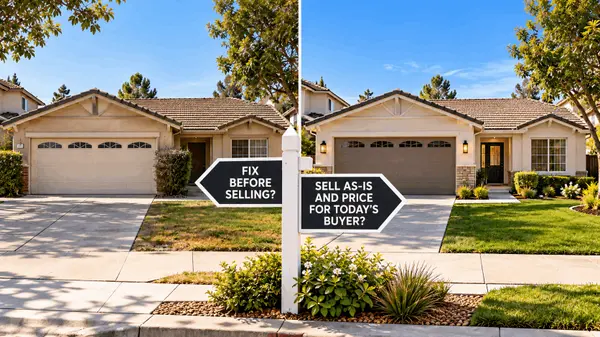
Should You Fix Your Chino or Chino Hills Home Before Selling—or Price It for Today’s Buyer?
Should You Fix Your Chino or Chino Hills Home Before Selling—or Price It for Today’s Buyer? Before you spend $20,000, $30,000 or even $50,000 fixing a Chino or Chino Hills home you’re already thinking about leaving, ask one question: Will the buyer actually pay you back for it? If you’ve owned your