
Your Kids and Grandchildren Moved Out of California—Should You Sell Your Chino or Chino Hills Home and Move Closer to Them?
For years, your Chino or Chino Hills home has been the center of your family's life.
This is where you raised your children.
Where birthdays were celebrated.
Where holidays happened.
Where the kids grew up, graduated and eventually started families of their own.
But something changed.
Your adult children moved out of California.
Maybe housing became too expensive.
Maybe they wanted a larger home, more land, a different pace of life or a lower overall cost of living.
Maybe a job opportunity took them to Texas, Arizona, Nevada, Tennessee, Idaho or somewhere else entirely.
At first, you visited.
A few holidays.
A birthday.
Maybe a week during the summer.
Then grandchildren came along.
And suddenly the distance started feeling different.
Pictures and FaceTime are wonderful.
But they're not the same as being there.
If retirement is also part of your decision, read our guide to selling your Chino or Chino Hills home and retiring outside California to compare the financial, housing, family and lifestyle considerations before making the move.
Now you find yourself asking:
“Should we sell our Chino or Chino Hills home and move closer to our kids and grandchildren?”
There is no automatic answer.
You've potentially spent decades building a life in Southern California.
Your friends may be here.
Your doctors may be here.
Your church, favorite restaurants, routines and community may be here.
And financially, you may own a home with substantial equity, a very low mortgage—or perhaps no mortgage at all.
Leaving isn't a small decision.
But neither is watching your grandchildren grow up hundreds or thousands of miles away.
And there's another part of this decision families sometimes don't think about until later:
Today you may want to move because your grandchildren need Grandma and Grandpa nearby. Someday, you may be grateful your adult children are nearby when you need them too.
This isn't simply a real estate decision.
It's a decision about where you want the next chapter of your family's life to happen.
The Short Answer: Should You Move Closer to Your Children and Grandchildren?
Maybe—but don't make the decision based only on the excitement of seeing your grandchildren more often or the assumption that another state will automatically be less expensive.
Before selling a longtime Chino or Chino Hills home, compare:
- What your California home is realistically worth
- How much equity you have
- What you would likely net from selling
- What housing would cost near your children
- The complete cost of living in the new state
- Healthcare, lifestyle and community considerations
- What you're gaining by moving
- What you're leaving behind
- Whether the new location works for your life—not just your children's
- Where you want to grow older
And perhaps ask the most important question:
“If our grandchildren weren't there, would we still be comfortable building a life in that community?”
Because moving closer to family can be wonderful.
But your children and grandchildren shouldn't have to become your entire life.
1. Why Are So Many Families Having This Conversation?
California has been home for generations of families.
But adult children sometimes reach a stage where buying the type of home or creating the lifestyle they want feels difficult.
They may start looking elsewhere.
Maybe they can buy:
- A larger house
- A bigger yard
- More land
- A newer home
- A home with room for children
- A home with space for visiting parents
- Or simply a home with a monthly payment that better fits their goals
So the adult children move.
Mom and Dad stay in California.
At first, everyone adjusts.
Then life keeps moving.
Grandchildren arrive.
The kids get older.
And Grandma and Grandpa start realizing:
“We're missing more than holidays. We're missing everyday life.”
That's when the real estate conversation changes.
2. Grandchildren Don't Stay Little Forever
This may be the emotional heart of the decision.
Your granddaughter isn't going to be four forever.
Your grandson isn't always going to be seven.
There are only so many:
Saturday soccer games.
School performances.
Birthday parties.
Trips for ice cream.
Grandparents' Days at school.
Afternoons at the park.
Family dinners.
You can fly in for Christmas.
You can visit for Thanksgiving.
You can schedule a summer vacation.
But what many grandparents eventually realize they miss are the moments nobody schedules.
The ordinary Tuesdays.
Picking up the grandchildren from school because Mom and Dad are working late.
Having them stop by after soccer practice.
Watching them for a few hours on Saturday.
Eating dinner together on a Wednesday night.
Having your grandchildren know that Grandma and Grandpa's house is 10 minutes away instead of a three-hour flight away.
Those moments are difficult to put on a spreadsheet.
But they have value.
3. Your Grandchildren May Benefit From Having You Nearby Too
This decision isn't only about what Grandma and Grandpa want.
There can be something incredibly valuable about children having grandparents actively involved in their everyday lives.
Grandparents can become another layer of family support.
Maybe it's:
- School pickups
- Babysitting
- Helping when a child is sick
- Attending sporting events
- Family dinners
- Holidays without airline tickets
- Sharing family traditions
- Telling family stories
- Simply spending time together
And sometimes the biggest benefit isn't anything dramatic.
It's familiarity.
Your grandchildren don't just know Grandma and Grandpa as people who arrive a few times a year.
They know you as part of their normal life.
Moving closer isn't necessarily about seeing your family more often. It can be about becoming part of their everyday lives again.
4. But Someday the Family Support May Work in the Other Direction
There's another side of this decision that deserves consideration.
Today, you may be completely healthy and independent.
You're moving because you want to help your children and spend more time with your grandchildren.
But you're also getting older.
Maybe you're 60.
Maybe 65.
Maybe 70.
Hopefully you remain independent for decades.
But life changes.
Ten or fifteen years from now, there may be:
- Doctor appointments
- Medical procedures
- Transportation needs
- Home maintenance
- Technology or household help
- A spouse who becomes ill
- A parent who shouldn't be living completely alone
- Or simply a greater desire to have family nearby
Today your children may appreciate having you close.
Someday you may appreciate having them close.
Moving closer to your children and grandchildren isn't necessarily about needing help today. It may be about building the family support system you may all appreciate tomorrow.
That family-support relationship can work both ways. If you're currently the adult child trying to help Mom or Dad from a distance, read our guide to whether you should sell your Chino or Chino Hills home and move closer to your aging parents—or whether bringing them closer to you could be the better solution.
That's a very different reason to consider the move.
5. Think About Where You Want to Grow Older Before Someone Has to Decide for You
Nobody wants to make a major life decision based on fear.
And moving closer to your children doesn't mean you're expecting something bad to happen.
Quite the opposite.
Planning while you're healthy and independent may give you more choices.
You can decide:
Which city do we want to live in?
What type of house do we want?
Do we want one story?
How close do we want to be to the kids?
What doctors and hospitals are nearby?
What kind of community do we want?
What will our social life look like?
Those decisions are easier when you're making them because you want to—not because a health event suddenly forces the family to make them quickly.
The best time to think about where you want to grow older may be while you still have the freedom to choose.
Planning doesn't mean you have to move.
Planning gives you options.
6. Don't Just Visit the New State—Practice Living There
This is one of the biggest recommendations we would make before selling a home you've owned for decades.
There's a huge difference between:
Visiting your grandchildren
and
living in their community.
When you visit, you're usually doing something.
Family dinners.
Birthdays.
Activities.
Holidays.
Everyone is excited you're there.
That's not everyday life.
Before making a permanent move, spend meaningful time there if circumstances allow.
And live like a resident.
Go grocery shopping.
Get gas.
Find restaurants you like.
Visit the gym.
Find a church or community organization if that's important to you.
Research healthcare.
Drive to the airport.
See how far the hospital is.
Explore neighborhoods.
Experience the weather.
Drive during rush hour.
And here's the big one:
What will you do on a Tuesday afternoon when your children are working and your grandchildren are at school?
That's your life too.
Your family may be the reason you move.
But you still need a life of your own.
7. Your Children and Grandchildren Can't Be Your Entire Retirement Plan
This may sound counterintuitive in a blog about moving closer to family, but it's extremely important.
You should have:
Your friends.
Your activities.
Your routines.
Your interests.
Your community.
Maybe that's golf.
Church.
Walking.
Volunteering.
Fitness.
Restaurants.
Travel.
A neighborhood social group.
Whatever makes your life enjoyable.
Moving closer to your grandchildren can give you more family time—but your children and grandchildren can't be your entire retirement plan.
Your adult children still have jobs.
Your grandchildren have school, sports, friends and eventually lives of their own.
The strongest move may be one where you get both:
Family nearby
and
a community where you can build your own life.
8. How Close Is Too Close?
Moving closer doesn't necessarily mean buying three houses down.
Some families would love that.
Others wouldn't.
Ask everyone honestly:
What does “closer” mean to us?
Five minutes?
Fifteen minutes?
Thirty minutes?
Same city?
Same general area?
Close enough for dinner on Wednesday doesn't necessarily mean close enough to see each other every day.
Sometimes a little distance gives everyone independence while still creating the family connection you're looking for.
The goal isn't necessarily to live next door. The goal is to remove the distance that keeps family from being part of everyday life.
9. What Is Your Chino or Chino Hills Home Worth?
Now we get to the real estate side.
Before deciding whether moving is financially realistic, understand what you already own.
Determine:
- Current market value
- Mortgage balance
- Approximate equity
- Estimated selling expenses
- Potential net proceeds
- Repairs or preparation that may be appropriate before selling
If you've owned your Chino or Chino Hills home for 20, 25 or 30 years, you may have substantial equity.
Maybe the mortgage is small.
Maybe the house is completely paid off.
That equity could create options.
Perhaps you could purchase another home near your children.
Maybe you could make a larger down payment.
Maybe you could downsize.
Maybe you could purchase something without a mortgage, depending on the numbers.
But remember:
Equity creates options. It doesn't make the decision for you.
First understand what you have.
Then determine what those resources could potentially allow you to do next.
10. What If You Have a 3% Mortgage—or No Mortgage at All?
This can make leaving California emotionally and financially difficult.
Imagine you've owned your Chino Hills home for years and have a 3% mortgage.
Or maybe it's completely paid off.
Selling means giving up that housing situation.
That's significant.
Don't dismiss it.
But also don't allow it to become the only reason you stay.
Ask:
“Are we keeping this house because it's still where we want to live—or because we're afraid to give up the mortgage?”
Those aren't the same thing.
A low mortgage rate is valuable.
A paid-off house is valuable.
But so is your time.
And if the people you most want to spend that time with live 1,500 miles away, that deserves a place in the decision too.
11. Don't Assume Leaving California Will Automatically Save You Money
Your children may have moved because the new state offered them a lower cost of living.
That doesn't automatically mean the financial equation will be identical for you.
Your situation may be completely different.
Maybe your California home is almost paid off.
Maybe your property-tax situation is favorable.
Maybe you have decades of equity.
Compare the complete housing and lifestyle costs in both places.
Consider:
- Home prices
- Mortgage
- Property taxes
- Homeowners insurance
- HOA
- Utilities
- Maintenance
- Healthcare
- Transportation
- State and local tax considerations
- Travel back to California
- Climate-related property costs
- Other recurring expenses
Don't compare:
California home price
versus
Texas home price.
Compare:
Your complete current life versus your complete future life.
12. What Could Your California Equity Buy Near Your Children?
This can be an eye-opening exercise.
Suppose you've built significant equity in your Chino or Chino Hills home.
Before deciding anything, determine:
What would we realistically net if we sold?
Then look at homes near your children.
Could your equity potentially buy:
- A smaller one-story home?
- A newer home?
- A home with less maintenance?
- A 55+ community property?
- Something close to the grandchildren?
- Something with a guest room?
- Something that better fits retirement?
Maybe the move would increase your expenses.
Maybe it would reduce them.
Maybe it would simply exchange one type of home for another.
You won't know until you compare actual numbers.
13. Think About the House You'll Need 10 or 20 Years From Now
If you're going to make a major interstate move, don't think only about the house you need today.
Think about the home that may work for your next chapter.
Maybe your Chino Hills home has:
Two stories.
A large yard.
A pool.
Five bedrooms.
That may have been perfect when you were raising children.
But do you want to maintain all of that at 75?
Or 80?
Your next home might prioritize:
- Single-story living
- Fewer stairs
- Lower maintenance
- Smaller yard
- Accessible bathroom
- Nearby healthcare
- Walkability
- Lock-and-leave convenience
- Proximity to family
Don't just move closer. Move smarter for the life you're likely to live next.
14. What About California Proposition 19?
This is an area where homeowners should get professional guidance before making assumptions.
California's Proposition 19 can provide qualifying homeowners age 55 or older with certain opportunities to transfer a taxable value to a qualifying replacement primary residence within California, subject to applicable rules and requirements.
But if you're moving from California to another state, you generally shouldn't assume your California property-tax base follows you there.
The new state will have its own property-tax laws.
That's why someone considering an interstate move should understand both:
The California consequences of selling
and
the property-tax structure where they're moving.
Speak with the appropriate county assessor and qualified tax professional regarding your specific situation.
15. What About Capital Gains If You've Owned Your Home for Decades?
This can be particularly important for longtime Chino and Chino Hills homeowners.
If you purchased your home many years ago and it has appreciated substantially, selling may have tax consequences.
The federal tax code may allow qualifying homeowners to exclude a portion of gain from the sale of a primary residence when applicable ownership and use requirements are satisfied, but every homeowner's tax situation is different.
Your adjusted basis, qualifying improvements, selling expenses, ownership, filing status and other factors can matter.
Before selling a highly appreciated longtime residence, speak with your CPA or qualified tax professional.
Understand the tax consequences before you make the move—not after the house closes.
16. Healthcare May Matter More Than You Think
When you're 45, choosing a community based on restaurants, schools and commute may make sense.
When you're planning where you may live through your 60s, 70s and 80s, healthcare becomes increasingly important.
Research:
- Primary-care doctors
- Specialists
- Hospitals
- Emergency care
- Medicare considerations
- Distance to medical facilities
- Availability of services you currently use
If you already have physicians in Southern California you've seen for years, leaving that network may be a meaningful change.
That doesn't mean don't move.
It means:
Healthcare belongs on the moving checklist too.
17. What Are You Leaving Behind?
It's easy to focus on what you're moving toward.
Don't forget what you're leaving.
Maybe you've lived in Chino for 30 years.
Your closest friends live nearby.
You know your neighbors.
Your church is here.
Your dentist knows you.
Your favorite restaurant knows your order.
You know exactly where everything is.
That's community.
And community has value.
Before moving, ask:
“Are we prepared to rebuild some of that somewhere else?”
Because you're not simply selling a house.
You're relocating a life.
That deserves careful consideration.
18. What If Your Adult Child Moves Again?
This is an uncomfortable question—but an important one.
Suppose you sell your California home and move to Texas because your daughter and grandchildren live there.
Three years later, her company transfers her.
What happens?
That's another reason your new location needs to work for you, not solely because your child currently lives there.
Talk openly with your adult children.
Ask about:
- Career plans
- Long-term intentions
- Whether they expect to remain in the area
- Their housing plans
- Their connection to the community
Nobody can guarantee where they'll live forever.
But the conversation is worth having.
Move toward family—but make sure you're also moving toward a place you could call home.
19. Should You Rent Before Buying?
For some families, this may be worth considering.
Instead of:
Sell Chino Hills → immediately buy in another state
perhaps the transition could involve renting temporarily in the new area.
That could give you time to understand:
- Neighborhoods
- Traffic
- Weather
- Healthcare
- Lifestyle
- Distance from family
- Housing options
- Whether you actually enjoy living there
There are tradeoffs to renting, and it won't be right for everyone.
But after living somewhere for 30 years, giving yourself time to learn a new community before making another major purchase can sometimes be valuable.
20. Maybe You Don't Have to Sell Immediately
There may be situations where a homeowner considers keeping the California property temporarily.
Perhaps you want to test the new state before making the move permanent.
Maybe you're considering converting the California home into a rental.
That creates an entirely different set of questions involving:
- Potential rent
- Mortgage
- Property taxes
- Insurance
- Maintenance
- Property management
- Vacancy
- Landlord responsibilities
- California landlord-tenant considerations
- Tax implications
Keeping the property isn't automatically better than selling.
Selling isn't automatically better than keeping it.
Understand both options before deciding.
21. What If Mom and Dad Don't Agree?
This happens.
One spouse says:
“I want to be near the grandchildren.”
The other says:
“I've lived here for 35 years. I'm not leaving.”
Neither person is necessarily wrong.
Instead of arguing:
“Should we move?”
ask:
“What does each of us need from the next 10 or 20 years of our life?”
Maybe one spouse needs family.
The other needs community.
One values financial security.
The other values experiences.
One is ready for a smaller home.
The other isn't ready to leave.
The goal shouldn't be for one spouse to win.
The goal is to find out whether there's a next chapter that works for both of you.
22. Maybe This Isn't Just Their Fresh Start—Maybe It's Yours Too
When your children first moved out of California, you may have thought:
“That's great for them. Our life is here.”
And maybe it was.
But five years later, your life may be different too.
You're retired.
The house feels bigger.
The stairs aren't as appealing.
The yard requires more work.
The grandchildren are getting older.
Your priorities have changed.
Maybe the children's move created an option you never previously considered.
The home that was perfect for raising your family doesn't automatically have to be the home where you spend every chapter of your life.
That doesn't diminish what the home meant.
It may simply mean the house completed the job you originally bought it to do.
A STAY, MOVE OR TEST-DRIVE Framework
If your children and grandchildren have moved out of California, consider three possible paths.
OPTION 1: STAY IN CHINO OR CHINO HILLS
Ask:
Do we still love our life here?
Is our home still appropriate for us?
Are our friends and support system here?
Can we comfortably travel to see the grandchildren frequently?
Would leaving create more sacrifice than benefit?
If so, staying may absolutely be the right decision.
OPTION 2: MOVE CLOSER TO FAMILY
Ask:
Do we genuinely like the new community?
What could our California equity allow us to buy?
What would our complete cost of living be?
Would the next home work as we age?
How close do we actually want to live to the children?
Can we create our own life there?
Would being near family meaningfully improve our next chapter?
If yes, moving may deserve serious consideration.
OPTION 3: TEST-DRIVE THE NEW LIFE
Before making the permanent move:
Spend more time there.
Rent temporarily if appropriate.
Explore neighborhoods.
Research healthcare.
Experience the weather.
Develop your own routine.
See what ordinary life feels like.
Then decide.
You don't have to make a 20-year decision based on a two-week visit.
20 Questions to Ask Before Moving Closer to Your Children and Grandchildren
- Why do we really want to move?
- Would we still like this community if our children didn't live there?
- How often would we realistically see the grandchildren?
- How close do we actually want to live?
- Do our children expect to remain there long term?
- What is our Chino or Chino Hills home realistically worth?
- How much equity do we have?
- What would we likely net after selling?
- What could we buy near our children?
- Would we have a mortgage?
- What would property taxes be?
- What would homeowners insurance cost?
- What are the overall living costs?
- What healthcare is available?
- Would the next home work for us as we age?
- What friends and community are we leaving behind?
- Can we build our own life in the new community?
- Should we rent there before buying?
- What tax issues should we discuss with our CPA or tax professional?
- Where do we genuinely want to spend the next chapter of our lives?
Those answers can tell you much more than an interest rate or market forecast ever could.
Frequently Asked Questions
Should I sell my Chino or Chino Hills home and move closer to my grandchildren?
Maybe. Start by comparing what you're gaining by moving with what you're leaving behind. Consider family time, home equity, replacement housing, complete living costs, healthcare, community and where you want to spend the next chapter of your life.
Is moving closer to grandchildren a good reason to sell?
It can be. Real estate decisions aren't always created by market conditions. For some grandparents, being involved in their grandchildren's everyday lives is more important than remaining in a longtime home. The decision should still make sense financially and personally.
Should grandparents move to the same neighborhood as their adult children?
Not necessarily. Some families love living extremely close, while others prefer 10, 20 or 30 minutes of separation. Talk openly about expectations before choosing a home.
Should we rent before buying near our children?
For some homeowners, temporarily renting may provide an opportunity to experience the community before making another major purchase. Consider the financial and practical tradeoffs before choosing that strategy.
What if I have a very low mortgage rate on my California home?
A low mortgage rate is valuable and should be included in the analysis. But also consider your equity, lifestyle, family priorities and complete cost of remaining versus moving.
What if my Chino or Chino Hills home is completely paid off?
A paid-off home can create substantial financial flexibility. Determine the home's value, potential net proceeds and what that equity could purchase near your family before deciding whether selling makes sense.
Can I transfer my California property-tax base to another state under Proposition 19?
Proposition 19's qualifying base-year-value transfer provisions concern replacement primary residences within California and are subject to specific eligibility requirements. If you're leaving California, don't assume your California property-tax treatment transfers to another state. Consult the appropriate county assessor and qualified tax professional.
What taxes should I consider before selling a longtime California home?
A sale may involve federal and California tax considerations depending on your gain, adjusted basis, ownership, use of the property and individual circumstances. Consult your CPA or qualified tax professional before making the final decision.
What if my children move again after we relocate?
That's why the new community should work for you independently of your children's current address. Discuss their long-term plans, but choose a location where you could still be happy if circumstances change.
Should we wait until we're older to move closer to our children?
Not necessarily. Some families prefer to plan while the parents are healthy and independent so they can choose the location, home and timing themselves rather than making decisions during a future health or family emergency.
Final Thoughts: Maybe You're Moving for Your Grandchildren Today—and Your Children Tomorrow
Selling a Chino or Chino Hills home you've owned for 20, 30 or even 40 years is not simply a financial transaction.
You're leaving memories.
Neighbors.
Friends.
Routines.
Maybe the home where you raised your children.
That deserves respect.
But there's another question worth asking:
“Where are the people we want to spend the next 20 years with?”
Today, moving closer may mean being there for:
Soccer games.
School pickups.
Birthday parties.
Sunday dinners.
And those ordinary Tuesday afternoons that never make it onto the family calendar.
Your grandchildren get Grandma and Grandpa nearby.
Your adult children get another layer of family support.
And years from now, that support may begin flowing in the other direction.
Maybe someday it's your son driving you to an appointment.
Your daughter helping after a medical procedure.
Your grandchildren stopping by to see you.
Or simply knowing that if you need your family, they're 15 minutes away instead of 1,500 miles away.
You're not simply deciding where to own your next house. You're deciding where you want your family to live life together.
And that's why we wouldn't tell someone:
“Your kids moved. You should sell and follow them.”
Absolutely not.
Maybe staying in Chino or Chino Hills is exactly where you belong.
But if you're beginning to wonder whether the next chapter should happen closer to your children and grandchildren, then it's worth understanding your options before circumstances make the decision for you.
The market doesn't create every move. Life does.
Sometimes life is retirement.
Sometimes it's health.
Sometimes it's downsizing.
And sometimes it's realizing that the home you've loved for 30 years is still a wonderful home—but the people you want to spend the next 20 years with now live somewhere else.
Leticia and Alberto Sotomayor help homeowners throughout Chino and Chino Hills—as well as the Inland Empire and Orange County—understand the California real estate side of decisions like these.
Our job isn't to convince you to leave California.
And it isn't to convince you to stay simply because you've lived here for decades.
Our job is to help you understand what your home may be worth, what your equity may look like, what selling could mean and what real estate options you have before you make one of the biggest decisions of your next chapter.
Because ultimately, this isn't just about where you want to live.
It's about who you want to live life closer to.
Important Real Estate, Tax & Legal Disclaimer
This article is for general informational purposes only and is not tax, legal, financial, investment, accounting or estate-planning advice. Leticia and Alberto Sotomayor are licensed real estate professionals, not attorneys, CPAs, accountants, tax advisers or financial advisers. Property-tax rules, Proposition 19 eligibility, capital-gains treatment, retirement considerations and the financial consequences of an interstate move vary based on individual circumstances and applicable law. Before making a major financial or interstate relocation decision, homeowners should consult their own qualified tax professional, attorney, financial adviser, county assessor and other appropriate professionals regarding their specific situation.
FROM OUR BLOG


Mom or Dad Is Moving In With You: Should You Sell Their Chino Home or Keep It?
Mom or Dad Is Moving In With You: Should You Sell Their Chino Home or Keep It? Mom or Dad is moving in with you. But what happens to the house they've spent 30 years calling home? Maybe the decision happened gradually. You started noticing that the yard wasn't being maintained the way it used to be.
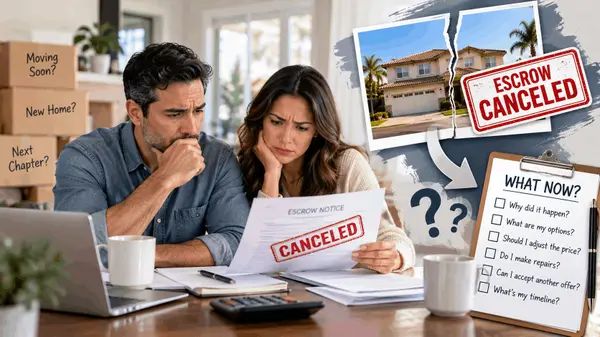
Your Buyer Canceled Escrow on Your Chino Home. What Should You Do Next?
Your Buyer Canceled Escrow on Your Chino Home. What Should You Do Next? Your buyer canceled escrow. But your reason for selling didn't disappear. You finally received an offer on your house. You negotiated the price. You signed the purchase agreement. You opened escrow. And you started making plans

Your Employer Is Relocating You: 9 Questions to Ask Before Selling Your Chino Home
Your Employer Is Relocating You: 9 Questions to Ask Before Selling Your Chino Home Your employer gave you a start date. But your house doesn't have a guaranteed closing date. Maybe you just received a promotion. A better salary. An opportunity to advance your career. Or perhaps your employer announc