
What Does It Mean to Be an Empty Nester? 5 Signs You’ve Entered a New Chapter—and What It Could Mean for Your Home
For years, your home may have been the center of your family's life.
Bedrooms were full.
The kitchen was busy.
There were backpacks by the door.
Cars coming and going.
Practices.
School events.
Friends sleeping over.
Birthday parties in the backyard.
Family dinners around the table.
Then, seemingly all at once, things change.
The kids grow up.
They leave for college.
They start careers.
They get married.
They buy homes of their own.
Maybe they begin raising families themselves.
And suddenly, the house that once felt like it was barely big enough can feel very different.
Quiet.
Spacious.
Maybe even a little too spacious.
If that sounds familiar, you may have entered a stage of life commonly referred to as becoming an empty nester.
But being an empty nester is about much more than having unused bedrooms.
For many parents, it represents one of the biggest transitions of adulthood.
And eventually, it can lead to another important question:
Does the home we bought to raise our family still make sense for the life we're living today?
For longtime homeowners in Chino, Chino Hills, the Inland Empire and Orange County, that question can involve emotions, lifestyle, finances, family, home equity and plans for the next 10, 20 or even 30 years.
Let's start at the beginning.
What Does “Empty Nester” Mean?
An empty nester is generally a parent or parents whose children have grown up and moved out of the family home.
Maybe the kids left for college.
Maybe they moved into their first apartment.
Maybe they got married.
Maybe they purchased their own home.
Whatever the reason, the household has changed.
The term comes from the idea of the family “nest” becoming empty once the children leave.
But that simple definition doesn't fully explain what the transition can feel like.
For 20 or 30 years, much of a parent's daily life may have revolved around raising children.
Then suddenly:
There are fewer schedules.
Fewer meals to prepare.
Fewer activities.
Fewer people coming through the front door.
And a lot more quiet.
That can create an adjustment that is both emotional and practical.
5 Signs You've Become an Empty Nester
There isn't a specific age when someone officially becomes an empty nester.
It happens when your household and lifestyle begin changing after your children leave home.
Here are five signs you may have entered that next chapter.
1. Your Children's Bedrooms Are Mostly Empty
The bedrooms are still there.
Maybe their furniture is still there.
Pictures are still on the walls.
Closets may still contain some of their belongings.
But your children aren't really living there anymore.
Maybe they visit on weekends.
Maybe they stay during holidays.
Maybe they bring the grandchildren over.
But most of the year, those rooms sit unused.
A four-bedroom home that once felt completely full may now effectively be a one-bedroom home with three guest rooms.
That doesn't mean you should sell it.
But it may cause you to begin thinking differently about how much house you're actually using.
2. You're Maintaining More House Than You're Living In
This is often when the practical side of empty nesting becomes noticeable.
You may still be maintaining:
A large backyard.
A swimming pool.
Four or five bedrooms.
Multiple bathrooms.
A second story.
A large garage.
Landscaping.
Extra living spaces.
Maybe 2,500, 3,000 or even 4,000 square feet.
When the kids lived at home, all of that space served a purpose.
Now you may find yourself cleaning rooms nobody uses and paying to maintain parts of the property you rarely enjoy.
Ask yourself:
“Are we still enjoying this home—or are we mostly maintaining it?”
There is an important difference.
3. Your Lifestyle Is Beginning to Change
For decades, your home may have been chosen around your children's needs.
Schools mattered.
Bedrooms mattered.
A large backyard mattered.
Being close to activities mattered.
Maybe you needed space for multiple cars.
But your priorities at this stage of life may be completely different.
Now you may want:
More travel.
Less maintenance.
A single-story home.
A lock-and-leave property.
A smaller backyard.
A home closer to restaurants and entertainment.
More time for hobbies.
Space for an RV.
A property closer to children or grandchildren.
Or perhaps you want the opposite.
Maybe you've always wanted more land, a bigger yard, RV parking or room for your hobbies, and now you're finally in a position to choose a home around what you want.
The important question becomes:
What would you choose if you were buying a home for the life you're living today instead of the life you were living 20 years ago?
4. You and Your Spouse Are Rediscovering Life as a Couple
This part of empty nesting isn't discussed enough.
For many couples, the previous 20 or 30 years revolved around raising children.
School.
Sports.
Homework.
College.
Work.
Family responsibilities.
Weekends.
Schedules.
Then the kids leave.
And suddenly, it's the two of you again.
That can be exciting.
It can also feel unfamiliar.
You may begin talking about things you haven't seriously considered in years.
Where do we want to travel?
What do we want retirement to look like?
Where do we want to live?
What hobbies do we want to pursue?
Do we want to stay close to our children?
What happens when grandchildren arrive?
Do we still want this much house?
Becoming empty nesters can create an opportunity for couples to start designing the next chapter together.
5. You've Started Asking, “Do We Really Need This House Anymore?”
This may be the biggest sign.
You walk upstairs and realize you haven't been in two bedrooms for weeks.
You look at the backyard and think about how much work it requires.
You pay the pool service.
The landscaper comes.
Something needs repairing.
You clean rooms nobody uses.
And eventually you ask:
“Why are we maintaining all of this for two people?”
That doesn't mean the answer is:
“Sell.”
It simply means the question is worth exploring.
Because the home that was perfect for raising your family may not automatically be the perfect home for the next stage of your life.
Why Becoming an Empty Nester Can Feel So Strange
This is where the conversation becomes much more than real estate.
Imagine raising your children in the same Chino or Chino Hills home for 20 or 25 years.
The kitchen wasn't simply a kitchen.
It was breakfast before school.
Homework at the counter.
Family dinners.
Holiday meals.
The backyard wasn't simply a backyard.
It was birthday parties.
Barbecues.
Kids playing.
Graduation celebrations.
The bedrooms weren't simply square footage.
They represent entire chapters of your children's lives.
That is why someone saying:
“Your kids moved out. Why don't you just downsize?”
can make the decision sound much easier than it actually is.
A family home can hold decades of memories.
Selling it can feel like closing a chapter.
Even when you're excited about the chapter that's coming next.
Is There a Psychological Adjustment to Becoming an Empty Nester?
For some parents, yes.
You may have heard the phrase “empty nest syndrome.”
It is commonly used to describe feelings of sadness, loneliness, loss or changes in identity that some parents experience when their children leave home.
It is not itself a formal mental-health diagnosis.
And not every parent experiences the transition the same way.
Some parents struggle with the quiet.
Some miss having their children around every day.
Some wonder:
“What is my role now?”
Others feel an enormous sense of freedom.
And many parents experience both.
You can miss hearing your kids come through the front door while also enjoying the freedom to take a spontaneous weekend trip.
You can feel sad walking past an empty bedroom while also being incredibly proud that your child is building an independent life.
Those emotions don't contradict each other.
They are part of a major family transition.
Your Relationship With Your Children Is Changing—Not Ending
This may be one of the most positive parts of becoming an empty nester.
Your relationship with your children begins to evolve.
You're no longer raising a child in the same way.
You're developing a relationship with another adult.
Eventually, you may become grandparents.
Family gatherings change.
The kids come home for holidays.
Then they may arrive with spouses.
Then perhaps grandchildren.
The family isn't disappearing.
It's growing and changing.
And your home may or may not continue to be the place where everyone gathers.
For some empty nesters, that is one of the biggest reasons they choose to stay.
Being an Empty Nester Does NOT Mean You Should Downsize
This is extremely important.
There is no rule saying:
Kids leave = parents sell the house.
You may absolutely love your home.
Maybe your mortgage is paid off.
Maybe you have a very low mortgage rate.
Maybe you love your neighborhood.
Maybe your property taxes are favorable.
Maybe your friends are nearby.
Maybe you love your backyard.
Maybe you want bedrooms available when the kids visit.
Maybe you want your grandchildren staying over.
Maybe your house remains the gathering place for Thanksgiving, Christmas and family celebrations.
If the home continues to improve your life and you can comfortably maintain it:
Staying may be exactly the right decision.
But What If the House No Longer Fits?
For other empty nesters, the answer becomes different.
Maybe you're tired of stairs.
Maybe the backyard is becoming too much work.
Maybe the pool gets used twice a year.
Maybe you want to travel more.
Maybe you're spending too much time maintaining the property.
Maybe you want to be closer to your children.
Maybe you're thinking about retirement.
Maybe you'd rather use the equity in the current home differently.
That's when it may be worth exploring your options.
Not because you're being told to move.
But because your life has changed.
Downsizing Doesn't Mean Buying a Tiny House
The word downsizing sometimes creates the wrong picture.
People imagine selling a beautiful family home and moving into something tiny.
That is not necessarily what downsizing means.
Imagine selling a 3,500-square-foot two-story home and purchasing a beautiful 2,000-square-foot single-story home.
That's downsizing.
Maybe you sell a large house with a pool and purchase something smaller with RV parking because you want to travel.
That's downsizing.
Maybe you move from a large suburban home into a lower-maintenance community.
That's downsizing.
Maybe you move closer to your children and grandchildren.
That's downsizing.
And sometimes the next move isn't really about downsizing at all.
Maybe you want a bigger lot.
Maybe you want more land.
Maybe you've always wanted RV parking.
Maybe you want room for a boat.
Maybe you want a workshop.
Maybe you want a view.
Maybe you want a home that better supports the hobbies you finally have time to enjoy.
Downsizing isn't necessarily about living with less.
It can be about owning a home that better fits the life you're actually living now.
Before You Downsize, Understand What You Already Own
Before looking at your next home, understand the financial position of your current one.
Longtime Southern California homeowners may have accumulated significant equity.
Start by determining:
- Estimated current market value
- Remaining mortgage balance
- Approximate selling expenses
- Estimated net proceeds
- Available savings
- Potential next-home budget
- Expected new housing payment
- Property taxes
- HOA expenses
- Insurance
- Maintenance
You may discover that your current home gives you more options than you realized.
Or you may discover that staying makes more financial sense.
Either result is valuable.
The goal is understanding the numbers before making the decision.
What About Your Low Mortgage Rate?
This is a major consideration for many homeowners.
If you have a mortgage rate significantly below today's rates, giving it up can be difficult.
And it should absolutely be part of the decision.
But it should not necessarily be the only factor.
Ask:
How much does the current home cost to maintain?
How much space are we actually using?
What repairs are coming?
What would the next home cost?
Would we have a mortgage on the next home?
Could our equity substantially reduce that mortgage?
Would our lifestyle improve?
What would staying cost over the next 10 years?
What would moving cost?
A low mortgage rate is valuable.
But your home also needs to support the life you want to live.
What About California Proposition 19?
For some California homeowners age 55 or older, Proposition 19 may be an important part of the downsizing conversation.
Eligible homeowners may be able to transfer the taxable value of a qualifying principal residence to another qualifying principal residence within California, subject to applicable requirements and calculations.
For a longtime homeowner with a low property-tax basis, that could potentially be significant.
However, Proposition 19 rules can be complicated.
Before making a decision based on an assumed property-tax outcome, speak with the appropriate county assessor and qualified tax or legal professionals about your specific situation.
Should You Move Closer to Your Children or Grandchildren?
This becomes a major question for some empty nesters.
When children were young, they lived with you.
Now they may live:
30 minutes away.
An hour away.
In another county.
Or in another state.
As grandchildren arrive, priorities sometimes change again.
Maybe you'd rather be five minutes from the grandkids than an hour away.
Maybe you'd like to help with childcare.
Maybe you want to attend school events and sporting activities.
Or maybe everyone enjoys having a little distance.
There is no correct answer.
But location has value because time has value.
Where you live during this chapter should reflect the relationships and lifestyle that matter most to you.
What If You Want to Travel More?
This is another major lifestyle consideration.
Maybe you have spent decades scheduling vacations around:
School calendars.
Sports.
Work.
Children.
College.
Now you can travel differently.
Maybe you want to spend several weeks in Europe.
Take road trips.
Buy an RV.
Spend more weekends away.
Visit grandchildren.
Own a second property.
A large home with extensive landscaping, a pool and constant maintenance may become something you worry about every time you leave.
For some empty nesters, a lower-maintenance home provides something more valuable than additional square footage:
Freedom.
Should You Remodel Instead of Move?
Possibly.
Maybe you love your neighborhood but no longer love the way your home functions.
Could you:
Create a downstairs primary bedroom?
Convert an unused bedroom into an office?
Turn another bedroom into a gym?
Create hobby space?
Reduce landscaping?
Make accessibility improvements?
Remodel the home around the way two people live instead of five?
Moving isn't always the answer.
Sometimes the best next home is the one you already own—with some changes.
What About All the Stuff?
This may be one of the biggest obstacles to downsizing.
A home occupied for decades can contain an enormous amount of life.
Children's schoolwork.
Photographs.
Furniture.
Clothes.
Holiday decorations.
Sports equipment.
Tools.
Collections.
Boxes that haven't been opened in 15 years.
And then there are the children's belongings.
You call and say:
“Do you want all of this stuff from your bedroom?”
And they say:
“Yes. Don't throw anything away.”
But they don't come get it.
Sound familiar?
Don't try to solve 25 years of belongings in one weekend.
Start slowly.
Create categories:
KEEP
GIVE TO THE KIDS
SELL
DONATE
DISCARD
UNSURE
You don't need to make every emotional decision immediately.
Should You Sell First or Buy First?
This depends heavily on your financial situation.
Some empty nesters have enough equity, income or available funds to purchase their next home before selling.
Others need the proceeds from the current property.
Possible strategies may include:
- Sell first
- Buy first
- Coordinate both transactions
- Negotiate additional occupancy after selling
- Use temporary housing
- Explore financing strategies with a qualified lender
There is no universal answer.
The strategy should be designed around your finances, comfort level and priorities.
The Most Important Question Isn't “Should We Sell?”
It is:
“Does this home still support the life we want to live?”
Maybe the answer is absolutely yes.
Wonderful.
Stay.
Enjoy it.
Let the grandchildren fill those bedrooms someday.
Host Thanksgiving.
Enjoy your backyard.
There is no reason to move simply because your children grew up.
But maybe the answer is:
“Not really.”
Then exploring alternatives does not commit you to selling.
It simply gives you information.
Questions Every Empty Nester Should Ask Before Moving
Before making a decision, sit down together and ask:
Do we still love living here?
How much of the house do we actually use?
How much does the property cost to maintain?
Are stairs becoming a concern?
What major repairs may be coming?
Do we want to travel more?
Do we want to be closer to family?
Would we prefer a single-story home?
Do we want less maintenance?
Would we rather have a bigger lot, RV parking or different amenities?
How much equity do we have?
What would our next housing costs look like?
What would we gain by moving?
What would we give up?
And perhaps most importantly:
If we were buying a home today for the life we're living now, would we buy this house again?
That answer can tell you a lot.
Frequently Asked Questions About Empty Nesters and Downsizing
What Is an Empty Nester?
An empty nester is generally a parent whose children have grown up and moved out of the family home.
What Is Empty Nest Syndrome?
“Empty nest syndrome” is a common term describing feelings such as sadness, loneliness, loss or changes in identity that some parents experience when their children leave home. It is not itself a formal mental-health diagnosis, and everyone's experience is different.
Does Becoming an Empty Nester Mean I Should Sell My House?
No.
If you love your home, can comfortably maintain it and it still fits your lifestyle, staying may be the best decision.
When Should Empty Nesters Consider Downsizing?
It may be worth exploring when the home requires more space, maintenance, expense or physical effort than you want, or when another property or location would better support your next stage of life.
Does Downsizing Always Mean Buying a Smaller House?
No.
The goal may be less maintenance, fewer stairs, a better location, a larger lot, RV parking, proximity to family or simply a different type of home.
Should Empty Nesters Buy a Single-Story Home?
For some homeowners, planning ahead for mobility and accessibility makes a single-story home attractive. But the right choice depends on your lifestyle and long-term plans.
Should We Move Closer to Our Children?
That is a personal decision.
Consider how often you see family, grandchildren, travel time, lifestyle and whether you expect family responsibilities to change.
How Do We Know How Much Equity We Have?
Start with an estimate of your current home's market value and subtract the remaining mortgage balance and estimated selling expenses.
A local market analysis can help provide a more property-specific estimate than relying solely on an online home-value estimate.
Alberto & Leticia's Perspective
When we talk with empty nesters, our first question isn't:
“When do you want to sell?”
We want to understand:
Why are you thinking about moving?
Maybe the house feels too large.
Maybe stairs are becoming a concern.
Maybe you want to travel.
Maybe you want less maintenance.
Maybe you want to move closer to your children.
Maybe you want a single-story home.
Maybe you want a smaller house but a bigger yard.
Maybe you finally want RV parking.
Or maybe you're simply curious about how much equity you've accumulated and what options that gives you.
And sometimes, after looking at everything, the answer may be:
Stay exactly where you are.
That's okay.
Our goal isn't to create a real estate transaction simply because your children moved out.
Our goal is to help you understand your options so you can decide whether your current home still fits the life you want for your next chapter.
Final Thoughts
Your home may have been the perfect place to raise your family.
It may be where your children took their first steps.
Where birthdays were celebrated.
Where homework was finished.
Where holidays were hosted.
Where graduations were celebrated.
Where your family became your family.
None of those memories disappear because your children moved out.
And selling the house does not erase them.
But keeping the house isn't the only way to honor them either.
Becoming an empty nester isn't simply about having empty bedrooms.
It's about entering a new chapter and deciding what you want that chapter to look like.
Maybe the family home still fits beautifully.
If it does, stay and enjoy it.
But maybe life has changed.
Maybe you want less maintenance.
More travel.
Fewer stairs.
More freedom.
A different location.
A bigger yard.
RV parking.
Or simply a home designed around the two people living there today instead of the family that lived there 20 years ago.
The first step isn't putting a For Sale sign in the yard.
The first step is understanding your options.
If you're an empty nester in Chino, Chino Hills, the Inland Empire or Orange County and you're beginning to wonder whether your current home still makes sense, Leticia & Alberto Sotomayor can help you look at the entire picture.
We can help you understand your home's current market value, estimated equity, local market conditions and potential next-home options so you can make the decision that's right for your family.
Because downsizing isn't necessarily about living with less.
It's about creating a home and lifestyle that fit the chapter you're living now.
FROM OUR BLOG


Should I Wait Until Spring 2027 to Sell My Chino or Chino Hills Home?
Should I Wait Until Spring 2027 to Sell My Chino or Chino Hills Home? If you're thinking about selling your home in Chino or Chino Hills, there's a question we're hearing more often: “Should we sell now—or just wait until spring 2027?” It's a reasonable question. Mortgage rates are above 7%. Buyers

Mortgage Rates Are Above 7%—What Does That Mean if You Need to Sell Your Chino Home?
Mortgage Rates Are Above 7%—What Does That Mean if You Need to Sell Your Chino Home? Mortgage rates are back above 7%. And if you're thinking about selling a home in Chino or Chino Hills, you may be asking a very reasonable question: “If buyers have to pay more to borrow money, what does that mean f
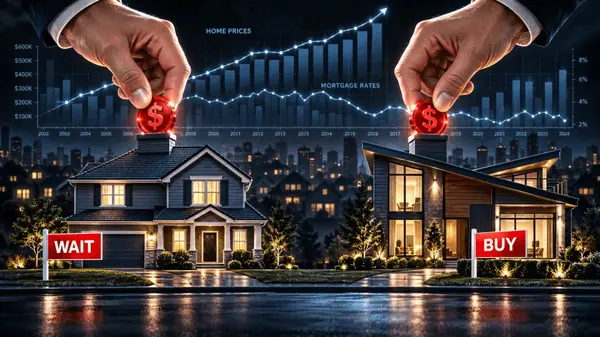
Should You Wait to Buy a Home in Chino or Chino Hills? Here’s What 23 Years of Data Say
Should you buy now, or wait for a better time? We hear this question from buyers in Chino California all the time, and I understand why you'd ask it. Putting your money into a home is a huge decision, and nobody wants to look back and wish they'd waited for a lower rate or a better price. A study by