
- Register
- /
- Sign In
How to Sell a Home Held in a Trust
How to Sell a Home Held in a Trust: A Complete Guide for Successor Trustees
Becoming the successor trustee of a family trust is often considered an honor.
It means someone trusted you to carry out their wishes and protect the legacy they spent a lifetime building.
But with that honor often comes an overwhelming amount of responsibility.
Many successor trustees have never settled an estate before.
They suddenly find themselves asking questions like:
- Can I sell the home?
- Do all the beneficiaries have to agree?
- Does the house need repairs first?
- What happens to all of the personal belongings?
- How long does the process take?
- Do I need court approval?
- Where do I even begin?
If you're asking those questions, you're not alone.
Over the years, we've helped many families throughout Chino, Chino Hills, the Inland Empire, and Orange County navigate trust property sales. While every trust is unique, one thing remains consistent—families need guidance from professionals who understand that this is much more than a real estate transaction.
This guide answers the most common questions people ask about selling a home held in a trust and explains the steps that can help make the process smoother for everyone involved.
What Is a Trust?
A trust is a legal arrangement that allows assets, including real estate, to be managed and distributed according to the wishes of the person who created it, often called the Grantor or Trustor.
Many families create living trusts to simplify the transfer of assets, avoid probate, maintain privacy, and provide clear instructions for managing their estate.
If a home is titled in the name of a trust, the process of selling it is often different from a probate sale.
Understanding those differences is one of the first steps toward making informed decisions.
What Is a Successor Trustee?
A successor trustee is the individual chosen to manage the trust after the original trustee can no longer do so.
That responsibility may include:
- Managing trust assets
- Protecting the property
- Communicating with beneficiaries
- Working with attorneys and financial professionals
- Paying ongoing expenses
- Coordinating the sale of real estate
- Distributing proceeds according to the trust's instructions
For many people, this is a role they've never had before.
It can feel overwhelming, especially while grieving the loss of a loved one.
The good news is that you don't have to handle every responsibility by yourself.
Can a Home Held in a Trust Be Sold?
Yes.
In many cases, a home owned by a trust can be sold by the successor trustee, provided the trust documents authorize the sale.
Unlike many probate transactions, trust sales often do not require court supervision, which can make the process more efficient.
Every trust is different, however.
Before making any decisions, it's important to review the trust documents and consult with the attorney assisting with the trust administration.
Do All Beneficiaries Have to Agree?
This is one of the most common questions families ask.
The answer depends on the language contained within the trust document.
Some trusts give the successor trustee broad authority to act independently.
Others may require beneficiary involvement under certain circumstances.
If disagreements arise, open communication and guidance from the estate attorney can help keep everyone focused on the trust's objectives.
What Documents Will You Need?
Every trust administration is unique, but before listing the property, it's helpful to gather important documents such as:
- The trust agreement
- Certification of Trust (if applicable)
- Death certificate
- Property tax information
- Mortgage statements
- Insurance information
- Utility information
- HOA documents (if applicable)
- Existing property disclosures, if available
Having these documents organized early often helps the transaction move more smoothly.
Should You Repair the Home Before Selling It?
One of the biggest misconceptions about trust sales is that every property must be completely remodeled before going on the market.
That's simply not true.
Every home deserves its own strategy.
Some homes benefit from:
- Deep cleaning
- Fresh paint
- Landscaping
- Minor repairs
- Decluttering
- Professional staging
Other homes may be better sold in their current condition.
The right decision depends on:
- The home's condition
- The local market
- The trust's financial goals
- The available budget
- The expected return on investment
The goal isn't to spend the most money.
The goal is to maximize value while making sound financial decisions for the trust.
What If the Home Has Deferred Maintenance?
Many trust properties have been owned by the same family for decades.
Over time, maintenance may have been postponed.
Common issues include:
- Older roofs
- Original kitchens or bathrooms
- Worn flooring
- Deferred landscaping
- HVAC systems nearing the end of their lifespan
- Plumbing or electrical updates
Deferred maintenance doesn't necessarily prevent a successful sale.
In some cases, strategic improvements increase buyer interest.
In others, selling the home as-is may be the best option.
An experienced real estate professional can help evaluate both approaches.
What Happens to the Personal Belongings?
This is often one of the most emotional parts of the process.
The home may contain decades of memories.
Family photographs.
Furniture.
Holiday decorations.
Personal collections.
Important documents.
Rather than rushing, many families find it helpful to sort belongings into categories:
- Items to keep
- Items for beneficiaries
- Items to donate
- Items to sell
- Items to discard
Professional estate sale companies, organizers, and clean-out services can also make the process much more manageable.
The goal isn't simply to empty the house.
It's to honor a loved one's legacy while preparing the home for its next chapter.
How Is a Trust Property Priced?
Many successor trustees wonder how to determine the right asking price.
The answer isn't based on what the family hopes the home is worth.
It's based on today's market.
Buyers compare every active listing.
They evaluate:
- Condition
- Location
- Monthly payment
- Property taxes
- Insurance costs
- Recent comparable sales
- Seller concessions
- Days on market
A thoughtful pricing strategy helps attract qualified buyers while protecting the value of the trust's assets.
How Long Does a Trust Sale Take?
Every trust sale is different.
The timeline depends on factors such as:
- Trust administration
- Property preparation
- Market conditions
- Buyer financing
- Inspections
- Escrow
- Title work
Planning ahead and assembling the right team often helps reduce delays.
The Hidden Responsibilities of Being a Successor Trustee
Many people underestimate just how much responsibility comes with serving as a successor trustee.
In addition to selling the property, you may also be responsible for:
- Protecting the home
- Maintaining insurance coverage
- Paying utilities
- Coordinating repairs
- Scheduling contractors
- Maintaining landscaping
- Communicating with beneficiaries
- Working with attorneys and CPAs
- Managing important deadlines
- Reviewing offers
- Coordinating escrow
That's a lot for one person to manage.
The good news is that you don't have to carry that responsibility alone.
Alberto & Leticia's Perspective
Over the past 20+ years, we've learned that trust sales are rarely just about real estate.
They're about families.
They're about honoring someone's legacy.
They're about making thoughtful decisions during a season of life that often feels overwhelming.
Successor trustees are suddenly asked to wear many hats.
They become organizers.
Decision-makers.
Communicators.
Problem-solvers.
All while processing the loss of someone they cared about.
That's why our role extends far beyond listing a property.
We're here to simplify the process, coordinate the professionals involved, communicate clearly, and help families move forward with confidence.
Because while selling a house may be one part of the process, helping families through one of life's most significant transitions is what truly matters.
Frequently Asked Questions
Can I sell a home that's in a trust without going through probate?
In many cases, yes. One of the primary advantages of a properly funded living trust is that assets may transfer without the probate process. Always review the trust documents and consult the attorney handling the trust administration.
Can a trustee sell a home without beneficiary approval?
It depends on the authority granted within the trust document. Every trust is different, so it's important to understand the trustee's legal responsibilities before proceeding.
Should we repair the home before selling it?
Not necessarily. Some homes benefit from strategic improvements, while others are best sold as-is. The right approach depends on the property's condition, the local market, and the trust's goals.
What happens to everything inside the house?
Families often sort belongings into items to keep, distribute, donate, sell, or discard. Estate sale companies and professional organizers can be valuable resources during this process.
How do I know what the home is worth?
A professional market analysis that considers current market conditions, comparable sales, location, and the home's condition can help determine an appropriate pricing strategy.
How We Can Help
Serving as the successor trustee of a family trust comes with significant responsibility, but you don't have to navigate it alone.
Whether the property is move-in ready, needs repairs, has years of deferred maintenance, or is filled with decades of personal belongings, we're here to help you create a clear, organized plan.
Over the past 20+ years, we've helped families throughout Chino, Chino Hills, the Inland Empire, and Orange County navigate trust property sales with professionalism, compassion, and expert guidance.
Our goal isn't simply to sell a house.
Our goal is to simplify a complex process, reduce uncertainty, protect the trust's assets, and help families move forward with confidence.
Contact Leticia & Alberto Sotomayor today for a confidential trust sale consultation, and let us help you navigate every step with clarity, care, and experience.
FROM OUR BLOG


Your 3% Mortgage Is a Great Rate—but Is It Keeping You in the Wrong Chino or Chino Hills Home?
Your 3% Mortgage Is a Great Rate—but Is It Keeping You in the Wrong Chino or Chino Hills Home? If you own a home in Chino or Chino Hills with a mortgage rate around 3%, you have something incredibly valuable. So when someone tells you: “You’d be crazy to give up that mortgage.” They’re pointing to s
Your Chino or Chino Hills Home Is Worth $1 Million—But Do You Want to Keep Spending Money Maintaining It?
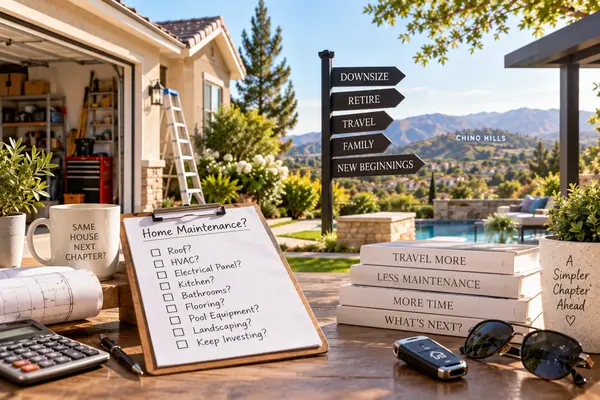
Your Chino or Chino Hills Home Is Worth $1 Million—But Do You Want to Keep Spending Money Maintaining It? You bought your Chino or Chino Hills home years ago for maybe $200,000, $250,000 or $300,000. Today? Depending on the neighborhood, size, lot, condition and other characteristics, that same home

Downsizing in Chino or Chino Hills: What If the Smaller Home Costs Almost as Much?
Downsizing in Chino or Chino Hills: What If the Smaller Home Costs Almost as Much? You've lived in your Chino or Chino Hills home for 20, 25 or maybe 30 years. It was the right house for that chapter of your life. Four bedrooms. Two stories. A pool. A large yard. Plenty of room for the kids. Maybe b